Welcome Back, Samsung: The Galaxy S26 Ultra Finally Matches the iPhone Where It Matters
For years, Samsung threw specs at the iPhone and lost. The Galaxy S26 Ultra represents a fundamentally different approach — and multiple reviewers independently declared Samsung "is back" as a legitimate flagship competitor.
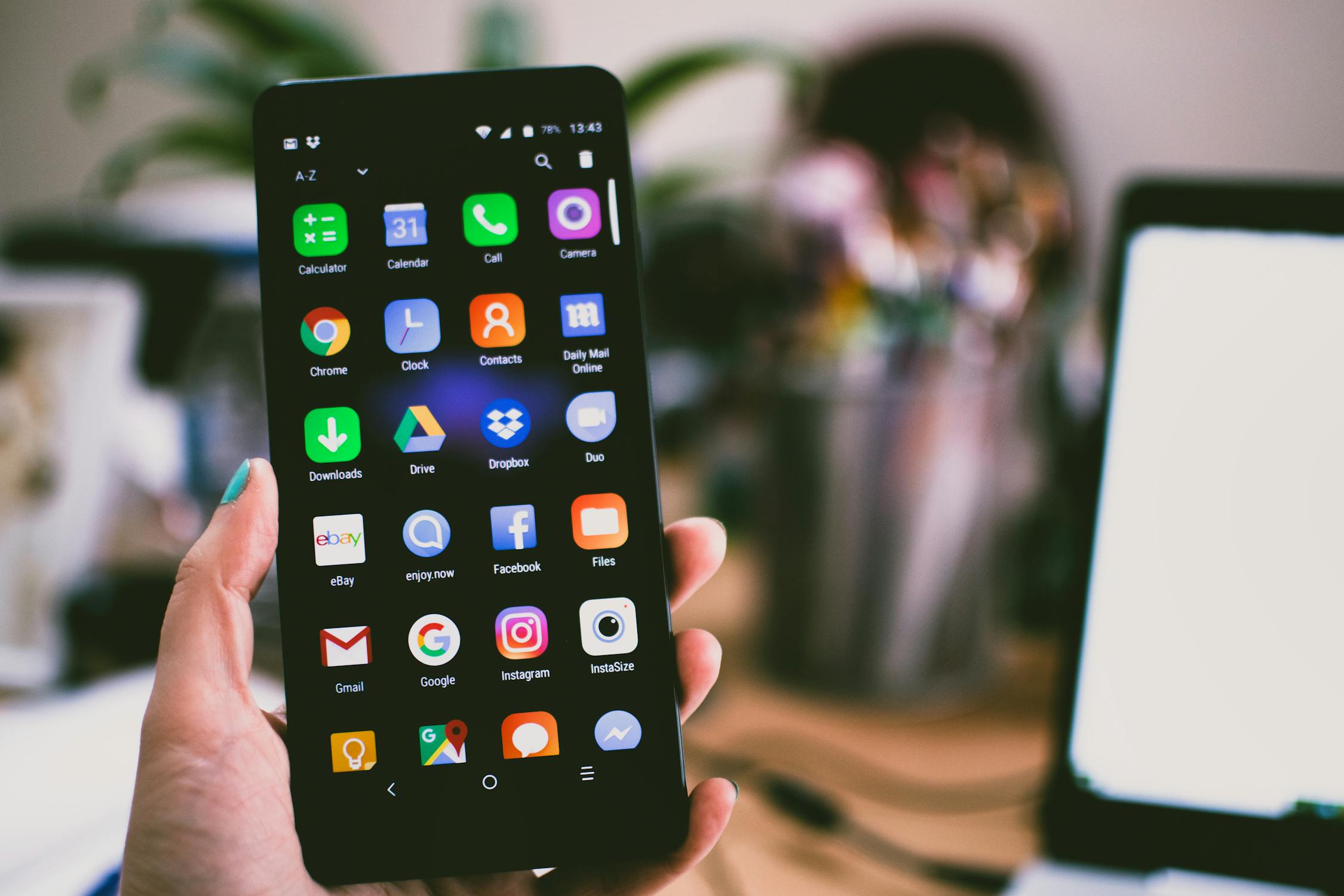
Close-up of a person holding a modern smartphone displaying its camera system
Key Points
•Samsung stopped chasing specs and started chasing experience — the Galaxy S26 Ultra is the thinnest Ultra ever at 7.9mm with a return to aluminum construction
•The camera finally achieves video parity with iPhone 17 Pro Max after 16 years, confirmed by multiple independent reviewers
•Samsung's Privacy Display hides your screen from onlookers at the pixel level — a genuinely innovative feature Apple has no answer to
•The Snapdragon 8 Elite Gen 5 delivers a 71% NPU advantage over Apple's A19 Pro, powering agentic AI features that shipped on day one while Apple Intelligence remains delayed
Samsung stopped chasing specs and started chasing experience
For the better part of a decade, Samsung's flagship strategy was simple: pack in the biggest numbers. More megapixels. More RAM. Bigger batteries. Higher zoom ratios. The spec sheets looked incredible. The actual experience often didn't match.
The iPhone, meanwhile, won hearts with fewer specs but better implementation. Apple's cameras had fewer megapixels but took better photos. Apple's processors had fewer cores but felt faster. Apple's ecosystem had fewer features but worked more reliably. It was frustrating for Samsung fans, but it was true.
The Galaxy S26 Ultra signals that Samsung finally internalized this lesson. [1]
As Rivera noted in his detailed comparison, the S26 Ultra is "the most iPhone Galaxy ever" — and that's not shade. The design language has shifted to elegant curves, glass-on-glass construction, and complete minimalism. Samsung switched back to armor aluminum from titanium, matching Apple's material choice. The phone is nearly 1mm thinner than the iPhone 17 Pro Max and 20 grams lighter. [1]
But the real shift isn't cosmetic. It's philosophical. Samsung removed "a ton of the gimmicks" from One UI 8.5, its Android skin. Previous Galaxy phones shipped with dozens of features that nobody used, buried in menus that nobody found. The S26 Ultra ships with fewer features that work better. Rivera called it "a very grounded launch." [1]
This matters because it means Samsung is no longer competing on a checklist. They're competing on whether the phone actually delights the person using it. That's a competition Apple has won for years. Now Samsung is finally showing up to the right fight.
The Galaxy S26 Ultra and iPhone 17 Pro Max are now closer than ever in overall experience — but Samsung's Privacy Display gives it a unique hardware advantage.
Every year, phone makers face the same criticism: iterative updates. A slightly better camera. A slightly faster chip. Nothing that changes how you actually use the device. Samsung's Privacy Display is the rare feature that breaks that cycle. [2][3]
The technology works at the pixel level. Narrow pixels can selectively switch off, making your screen content invisible to anyone not looking at it head-on. You can activate it for your entire screen, specific apps, incoming notifications, or just when entering PINs and passwords. It works in transit, in cafes, in open offices — anywhere someone might glance at your phone. [2][3]
This isn't a software filter that dims your screen and makes it harder for you to see. It's a hardware innovation built directly into the display panel. Samsung calls it the mobile industry's first built-in privacy display, and reviewers have validated that claim. Tom's Guide called it "truly innovative and useful." [3]
The timing is smart. In an era where phones contain banking apps, health data, private messages, and authentication codes, screen privacy is a genuine concern that most people solve with awkward screen protectors or just tilting their phone away from strangers. Samsung built the solution into the display itself. [2]
Apple has nothing comparable. And for the first time in a while, that's a meaningful gap in Apple's direction.
The chip battle has shifted to AI performance
The Snapdragon 8 Elite Gen 5 inside the S26 Ultra is a beast, but the numbers that matter most aren't the traditional ones. Yes, CPU performance is up 19% over last year. Yes, GPU rendering improved 24%. These are the expected annual improvements that keep benchmark enthusiasts happy. [2][3]
The number that actually matters is 39% — the improvement in NPU (Neural Processing Unit) performance. This is the silicon dedicated to running AI workloads on-device, and it's the engine that powers every headline feature Samsung is promoting. [2]
In Geekbench AI testing, the S26 Ultra's NPU scored dramatically higher than the iPhone 17 Pro Max's neural engine — a 71% gap, according to reviewer testing. Apple's A19 Pro still wins single-core CPU tests, which means iOS still feels snappier when opening apps and scrolling through feeds. But Samsung now owns multi-core processing and AI inference speed. [1][3]
This matters because both companies are betting their futures on on-device AI. Samsung's "agentic AI" features — Now Nudge, Now Brief, automated app actions — all run through that NPU. The faster it processes, the more responsive and useful those features feel. [2]
Now Nudge reads context from your screen and suggests relevant actions. If a friend texts asking for photos from your trip, it surfaces those specific photos from your gallery. If someone mentions a meeting time, it checks your calendar for conflicts. It's the kind of proactive intelligence that sounds gimmicky on stage but could genuinely reduce the friction of daily phone use. [2]
The agentic features go further. Samsung demonstrated booking an Uber through natural voice commands — the phone handles the multi-step process in the background, confirms the details, and you just approve. The same applies to ordering food through DoorDash or building grocery carts in Instacart. These features launched with the phone, while Apple Intelligence continues to face delays and limited rollouts. [2][3]
Whether agentic AI actually delivers on its promise remains to be seen. These features need real-world usage and time to prove themselves. But Samsung deserves credit for shipping them on day one rather than promising them for a future update that may or may not arrive.
The camera finally matches the iPhone — and that changes everything
For 16 years, one statement held true in the smartphone industry: if you care about video, buy an iPhone. Samsung phones took great photos but produced "warpy" video with inferior stabilization, inconsistent color, and weaker dynamic range. That gap defined the competitive landscape. Professional creators chose iPhone. Period. [1]
The Galaxy S26 Ultra closes that gap. Multiple independent reviewers confirmed that Samsung's video quality now matches — and in some scenarios rivals — the iPhone 17 Pro Max. Rivera was particularly emphatic: "It finally happened. The Galaxy is finally on par with the iPhone." [1]
The hardware improvements explain some of this. The 200MP wide camera now opens to F1.4, capturing 47% more light than the S25 Ultra. The 50MP telephoto camera opens to F2.9, a 37% brightness improvement. Wider apertures mean more photons hitting the sensor, which means cleaner footage in challenging lighting. [2][3]
But hardware alone didn't close the video gap. Samsung's image processing has fundamentally improved. Color science is now warmer and more natural. Stabilization is dramatically better, with the new Super Steady mode adding a Horizon Lock feature that keeps footage level even if you rotate the phone. And Samsung added APV codec support — a professional-grade video format designed for production workflows that maintains quality through multiple edits. [1][2]
In photography, the two phones are now nearly indistinguishable. Rivera spent "hours going back and forth" comparing results and found them "nearly identical" in most scenarios. Samsung's color science is slightly warmer in certain conditions. The Galaxy offers wider and longer zoom ranges. Low-light performance is comparable, with each phone winning in different angles and scenarios. [1]
The Galaxy still leads in one specific photo category: moonshots and extreme zoom. Samsung's 100x Space Zoom has been a headline feature for years, and it continues to outperform Apple's more conservative zoom range. For everything else — landscapes, street photography, portraits — you'd struggle to consistently identify which phone took which photo. [1]
The selfie camera is a mixed bag on both devices. Neither phone handles multiple subjects particularly well in portrait mode, and low-light selfie quality is inconsistent on both sides. Samsung's new AI ISP processing for the front camera aims to deliver more natural skin tones, but reviewers noted it's hit or miss. [1][2]
The real trade-offs — and what they mean for your wallet
The Galaxy S26 Ultra starts at $1,299. Samsung didn't raise the price this year, unlike the regular S26 and S26+ which both got $100 increases. For that price, you get a phone that legitimately competes with or beats the iPhone in most categories. [3]
The compromises are real but manageable. The camera bump is larger than previous models, creating wobble on flat surfaces — a complaint that multiple reviewers flagged. There's no silicon-carbon battery, which some Chinese phone makers have adopted for faster charging and higher energy density. The display, somewhat surprisingly, tests slightly dimmer than last year's S25 Ultra in HDR content. [1][3]
Battery life is excellent on both phones. Both last more than a full day with ease, with the S26 Ultra holding a slight edge thanks to its 5,000mAh cell and improved power efficiency from the new chip. Samsung's Super Fast Charging 3.0 reaches 75% in 30 minutes, competitive with Apple's charging speeds. [1][2]
The ecosystem question still favors Apple. If you own AirPods, a MacBook, an Apple Watch, and an iPad, switching to Samsung means leaving an ecosystem that "just works." Samsung has made massive improvements to cross-device integration, and Rivera acknowledged it's "very close" to Apple's level. But close isn't equal, and the lack of AirDrop support remains a gap. [1]
For Android users, the S26 Ultra is the clearest recommendation in years. For iPhone users considering a switch, the argument is stronger than it's ever been — but the ecosystem lock-in remains the most powerful force in consumer tech.
What Samsung learned from Apple — and what Apple should learn from Samsung
The Galaxy S26 Ultra's greatest achievement isn't any single feature. It's the strategy behind the phone. Samsung studied what made Apple successful — software-hardware integration, design restraint, ecosystem cohesion — and applied those lessons without losing what makes Samsung unique.
The S Pen is still here. The 100x zoom is still here. The customization options that Android users love are still here. But the gimmicks are gone. The bloatware is reduced. The experience is focused. Samsung learned that subtraction can be more powerful than addition. [1]
Apple, meanwhile, should be paying attention to two things. First, Privacy Display is a genuinely innovative feature that Apple didn't think of first. Second, Samsung shipped agentic AI features on launch day while Apple Intelligence remains incomplete. These are not small advantages. They represent areas where Samsung is now leading, not following.
The smartphone market has been a two-horse race for over a decade. For most of that time, it wasn't particularly close. The Galaxy S26 Ultra makes it a real competition again. And competition, as always, is what produces the best products for consumers.
Welcome back, Samsung. The race just got interesting.