

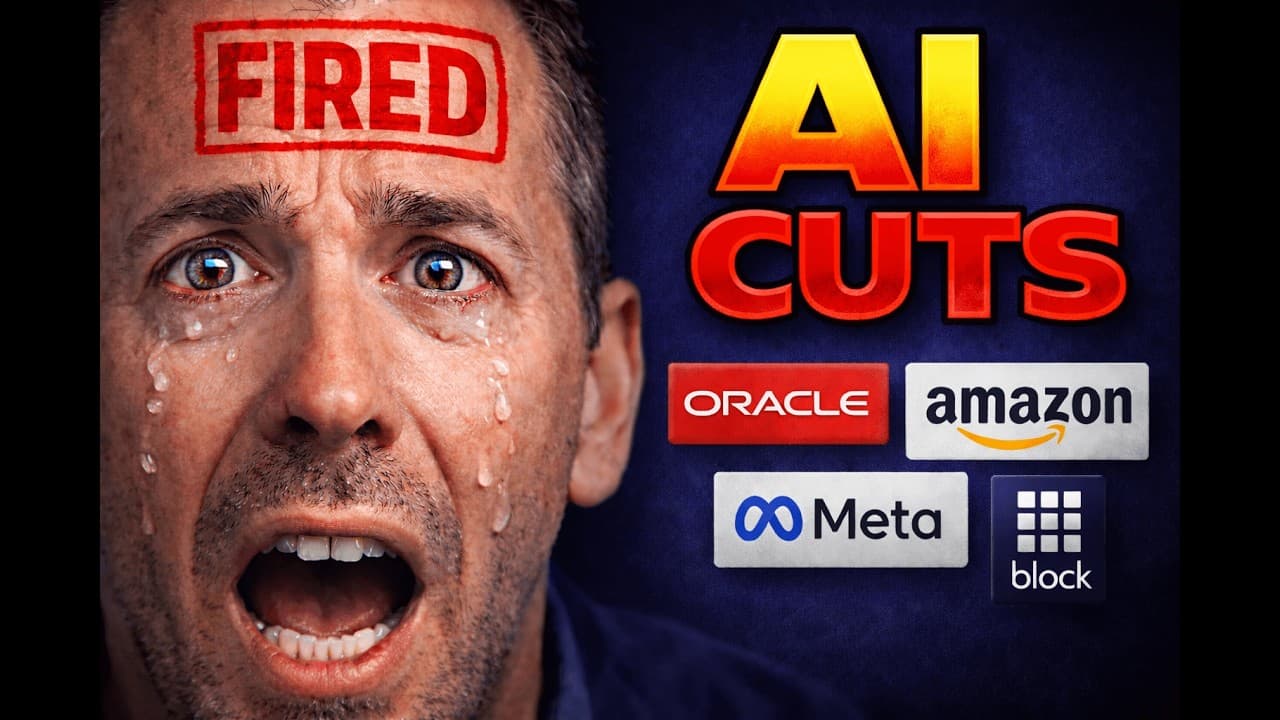
Here's the detail that stopped me cold when I saw it surface in a Grind Hotline video [1] this week: Amazon employees were asked to join "knowledge transfer sessions" — sit-down documentation exercises where they walked through their workflows, explained their processes, and described how they did their jobs. Routine stuff, right? Onboarding material. Institutional knowledge preservation. Then those workers started getting laid off. And they realized — the recordings weren't for onboarding. They were feeding the AI agents being trained to do exactly what those employees had just finished documenting. Amazon made its staff build the machine that deleted their own badges. That one story captures something about Q1 2026 in tech that statistics can't fully convey. This isn't a "tech correction." It's not a cyclical downturn. It's a coordinated, deliberate reshaping of the workforce at profitable companies that have discovered they can fire people, tell investors it's "AI optimization," and watch the stock price climb. And right now, it's working perfectly.
The Math Is Simple: Fire People, Make Shareholders Happy
Let's be clear about what's actually happening here, because the companies involved have been very careful about their framing. Oracle, Meta, Amazon, and Block have collectively eliminated nearly 80,000 jobs in the first quarter of 2026 [1]. Not because they're struggling. Meta had $200 billion in revenue last year. Amazon posted $56 billion in profit. Oracle stock is at all-time highs. Block cut 40% of its workforce — and its stock jumped 22% the same week [1]. That jump tells you everything. Wall Street has found a new formula: companies that treated AI as a future investment are now using it as a present-day justification for restructuring. You don't even need the AI to actually do the job yet. You just need to say the words "AI efficiency" and the market rewards you immediately. Haraj Singh from Grind Hotline called it "AI washing" — and I think that's exactly right [1]. Block's Jack Dorsey was at least honest about it. He said flat out that intelligence tools can do the work better. The business was profitable. The stock was underperforming. So he cut half the company and got rewarded. The others are playing the same game with more corporate-speak layered on top.