The Wall Falls: Samsung Galaxy S26 Now Speaks AirDrop — and Apple's Walled Garden Will Never Be the Same
Samsung rolled out native AirDrop compatibility on the Galaxy S26 via Quick Share — marking the first time Android-to-iPhone file sharing works without third-party apps, and signaling a fundamental crack in Apple's ecosystem moat.
•Samsung rolled out native AirDrop compatibility via Quick Share on the Galaxy S26 series starting March 23, making it the first time Android-to-iPhone file sharing works without third-party apps — a milestone that signals a fundamental shift in how the two dominant mobile platforms coexist [1]
•The rollout follows Google Pixel 10's earlier Quick Share-AirDrop integration, meaning two major Android manufacturers now support Apple's proprietary protocol — creating competitive pressure that could force Apple to open further or watch its ecosystem advantage erode from multiple directions [2]
•Apple's requirement that users manually set AirDrop to "Everyone for 10 minutes" reveals the company's reluctant participation in cross-platform sharing — a design choice that tells you everything about how Cupertino views interoperability as a concession, not a feature [3]
The Biggest Small Update of 2026
Sometimes the most important changes in technology arrive not with a keynote and a standing ovation, but with a firmware update and a changelog entry. Samsung's rollout of AirDrop-compatible Quick Share on the Galaxy S26 series is exactly that kind of moment [1].
Starting March 23, Galaxy S26 owners began receiving a software update (S948BXXU1AZCF, if you care about build numbers) that lets them send photos, videos, and files directly to any nearby iPhone — no app download, no QR code scanning, no email workaround. Just tap, select the recipient, and send. The way file sharing should have worked between Android and iOS for the past fifteen years [3].
It sounds mundane. It isn't. For over a decade, the inability to easily share files between Android and iPhone has been one of the most persistent, annoying friction points in consumer technology. It's the reason your Android-using friend sends you photos via WhatsApp instead of just beaming them over. It's why group photo albums from vacations inevitably end up in some cloud service nobody wanted to sign up for. And it's been, quite deliberately, one of the invisible walls that kept people locked into Apple's ecosystem [1].
That wall just got its first real crack.
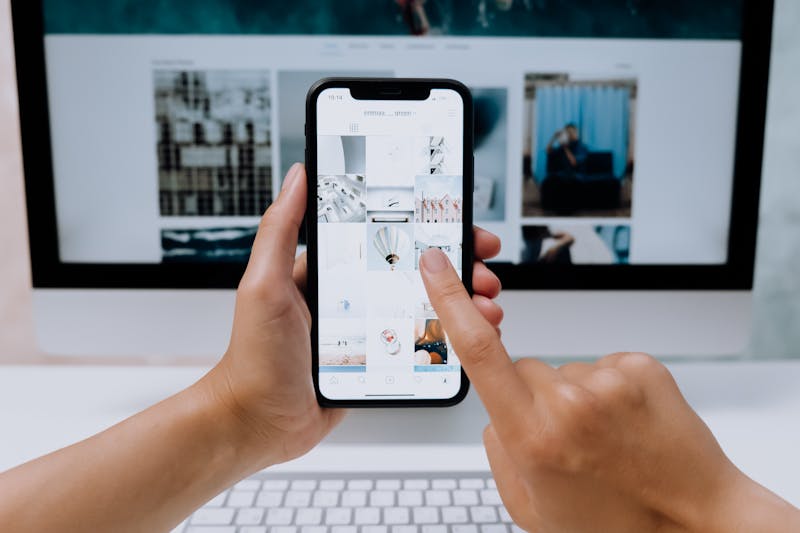
Quick Share now lets Galaxy S26 owners beam files directly to iPhones — no third-party apps needed.
The technical implementation is straightforward, which is part of what makes it impressive. Samsung integrated Apple's AirDrop protocol directly into its existing Quick Share framework. When a Galaxy S26 user opens Quick Share, nearby iPhones appear alongside other Samsung and Android devices in the sharing menu. Select an iPhone, confirm the transfer, and the file moves over via a combination of Bluetooth for discovery and Wi-Fi Direct for the actual data transfer [3].
On the iPhone side, the experience is identical to receiving a file from another Apple device. The familiar AirDrop notification pops up, the user accepts, and the file lands in their Photos app or Files folder. No new app required. No account to create. No hoops to jump through [3].
There is one catch, and it's a revealing one. The iPhone must have AirDrop set to "Everyone for 10 minutes" for Samsung devices to appear as recipients. Apple doesn't allow a persistent "receive from Android devices" toggle. You have to actively choose to open the door, and it closes automatically after ten minutes [3].
This isn't a technical limitation. It's a design choice — and a telling one. Apple controls the AirDrop protocol. It could easily add a permanent "allow Quick Share devices" option. Instead, it chose the most friction-laden implementation possible while still technically complying with the interoperability standard. It's the digital equivalent of leaving your front door open but refusing to install a doorbell [1].
The Pixel Precedent
Samsung isn't the first Android manufacturer to crack AirDrop. Google's Pixel 10 series beat them to it, integrating Quick Share-AirDrop compatibility earlier in 2026. But Samsung's entry changes the calculus dramatically [2].
The Pixel line, for all its influence among tech enthusiasts and developers, commands a relatively small share of the global smartphone market. When Google added AirDrop support, it was a proof of concept — evidence that cross-platform file sharing could work. When Samsung adds it, it's a market event [2].
Samsung sells roughly 270 million smartphones annually, making it the world's largest phone manufacturer by volume. The Galaxy S26 series is just the starting point — the feature will almost certainly expand to Samsung's A-series and other mid-range devices, potentially reaching hundreds of millions of users within the next year [1].
This creates a network effect that Apple can't ignore. When one Android manufacturer supports AirDrop, Apple can treat it as an edge case. When the two biggest Android brands both support it, and more are likely to follow, the dynamic shifts. Suddenly, the question isn't "why would Apple open up?" but "what does Apple lose by staying closed?" [2].
Apple's Walled Garden Strategy, Under Pressure
To understand why Samsung's AirDrop compatibility matters beyond the convenience factor, you need to understand Apple's business model at its core.
Apple doesn't just sell hardware. It sells an ecosystem — a tightly integrated network of devices, services, and software that works best when every device in your life has an Apple logo on it. AirDrop was always part of that strategy. The ease of sharing between iPhones, iPads, and Macs was a feature that only Apple users could access, and it created a social pressure to stay within the ecosystem [1].
This is the "green bubble" problem at its most subtle. When your entire family uses iPhones, switching to Android means losing not just iMessage but also AirDrop, Shared Photo Libraries, FaceTime, and a dozen other features that make Apple-to-Apple interactions frictionless. Each of these features is a thread in a web that holds users in place — not through quality alone, but through the cost of leaving [2].
Samsung and Google are now cutting those threads, one by one. RCS messaging broke the iMessage monopoly on cross-platform texting. Quick Share-AirDrop compatibility breaks the file-sharing lock-in. Each individual thread seems small. Together, they're reshaping the competitive landscape [3].
The EU Connection You're Not Hearing About
This isn't happening in a regulatory vacuum. The European Union's Digital Markets Act (DMA), which went into full enforcement in 2024, explicitly requires dominant platforms to enable interoperability with competing services. While Apple has focused most of its DMA compliance on App Store changes and default app selection, the pressure to open communication and sharing protocols has been building steadily [1].
Google and Samsung's Quick Share-AirDrop integration may not be a direct result of DMA enforcement, but the regulatory environment created the conditions for it. Apple's decision to allow (however grudgingly) cross-platform AirDrop connections is best understood as a preemptive move — better to control the terms of interoperability than to have Brussels dictate them [2].
The "Everyone for 10 minutes" limitation is, in this context, Apple's way of complying with the spirit of interoperability while maintaining as much friction as possible. It's compliance, not collaboration. And regulators are watching [1].
What This Means for You (and for Apple's $3.8 Trillion Valuation)
For consumers, the practical impact is simple: sharing files between Samsung phones and iPhones is now almost as easy as sharing between two iPhones. Almost. That ten-minute window is an annoyance, not a dealbreaker. For families, friend groups, and workplaces with mixed device ecosystems, this removes a genuine daily friction [3].
For Apple, the implications are more complex. The company's services revenue — which includes iCloud, Apple One bundles, and App Store commissions — depends partly on users staying within the ecosystem. Every interoperability improvement reduces the switching cost of moving to Android, which theoretically reduces Apple's pricing power and user retention [1].
In practice, most iPhone users won't switch to Android because of AirDrop compatibility. The ecosystem lock-in is deep and multi-layered. But at the margins — for the teenager deciding between their first iPhone and a Galaxy S26, for the small business choosing which phones to buy for their team — every reduction in cross-platform friction shifts the math slightly against Apple [2].
Samsung knows this. That's why they're not just adding the feature quietly. The Galaxy S26's AirDrop support has been prominently featured in Samsung's marketing, positioned as evidence that Samsung plays nicely with everyone while Apple plays nicely only with itself. It's a competitive narrative, and it's effective [1].
The Bigger Picture: Interoperability Is Winning
Zoom out from the Samsung-Apple specifics, and a broader trend becomes clear: the era of walled gardens is ending, slowly but definitively.
RCS messaging forced Apple to support a universal texting standard. The DMA is forcing Apple to allow third-party app stores and default browser changes. Quick Share-AirDrop integration is breaking the file-sharing monopoly. Each of these changes was resisted by Apple for years, sometimes decades. Each arrived not because Apple wanted it, but because competitive pressure and regulatory action left no alternative [3].
The smartphone market in 2026 looks fundamentally different from even two years ago. Cross-platform compatibility is no longer a nice-to-have — it's a baseline expectation. Consumers are increasingly unwilling to accept artificial limitations that exist solely to benefit a platform's business model rather than the user's experience [2].
Samsung's AirDrop support is a milestone in this shift. It's not the end of Apple's ecosystem advantage — that advantage is built on hardware quality, software integration, and brand loyalty that won't evaporate because of a file-sharing update. But it's another signal that the competitive moat Apple built around its platform is getting narrower, one feature at a time [1].
For the broader tech industry, the lesson is straightforward: build walls high enough, and eventually someone will build a taller ladder. Samsung just did.