Tesla's Cybercab vs. Zoox: We Went Inside Both Robotaxis at SXSW — Here's What Actually Matters
A tech YouTuber got hands-on access to Tesla's production Cybercab at SXSW Austin, comparing it side-by-side with Amazon's Zoox. The result? Two radically different visions for the future of autonomous rides — and neither is quite perfect yet.
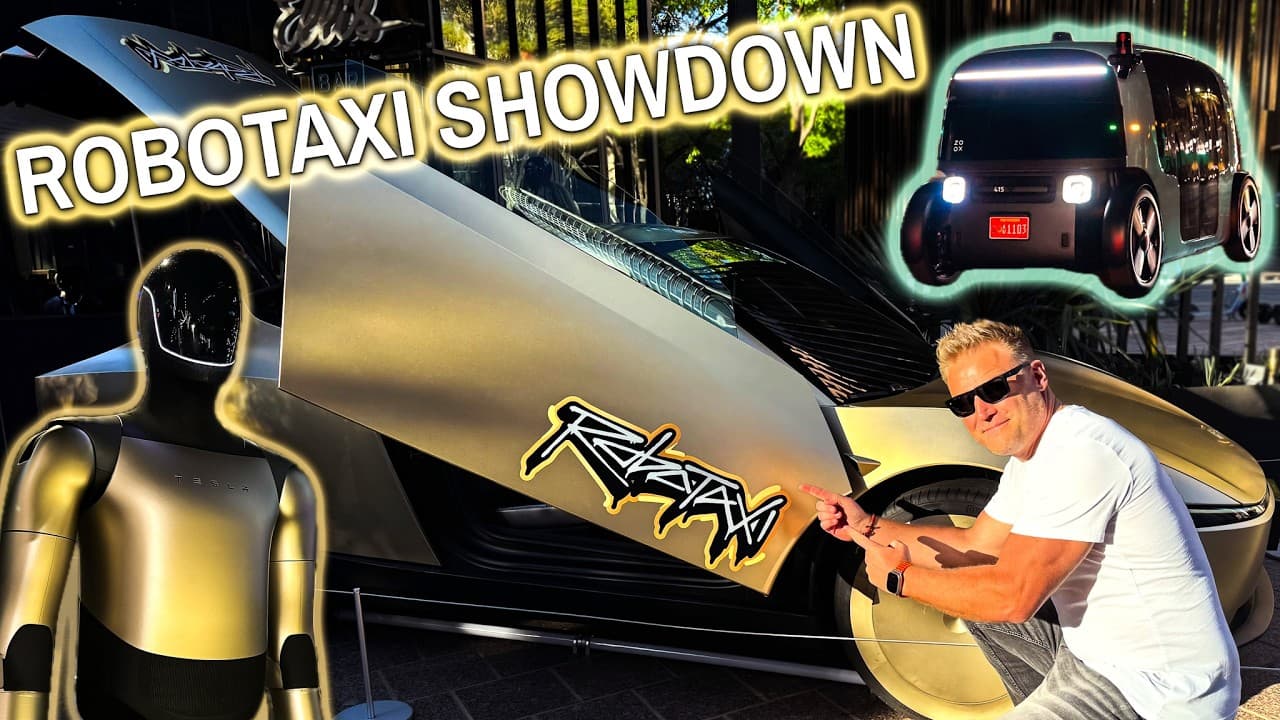
Tesla Cybercab on display at SXSW Austin alongside Zoox robotaxi comparison
Key Points
•Tesla's production Cybercab debuted at SXSW with hands-on public access — no steering wheel, soft-close doors, near-silent acoustics, AI4 chip
•Side-by-side comparison with Amazon's Zoox revealed fundamental design philosophy differences: Zoox = bidirectional, no trunk, wireless charging; Cybercab = trunk, USB-C only, car seat incompatible
•Tesla's Giga Texas is already producing Cybercabs at scale, with 36+ units spotted via drone footage ahead of April mass production
•Both vehicles optimize for easy cleaning and minimal human maintenance — signaling a robotaxi fleet model, not personal ownership
•Cybercab is sub-$30K; Zoox isn't for sale to consumers at all — entirely different business models
•Tesla's unsupervised FSD demo on Austin's busy SXSW streets was "gutsy" — and apparently went without incident
Two Robotaxis Walked Into SXSW
Tesla brought its production Cybercab to South By Southwest in Austin, Texas, and for once the hype was backed by something real: actual hands-on access to a vehicle you could get inside, poke around, and sit in. A tech YouTuber documenting the event — who'd previously ridden in a Cybercab prototype at Tesla's "We, Robot" event — got full access to the production unit and didn't pull punches on what he found [1]. Then, in a twist, Zoox showed up to the same event with its own robotaxi popup. Two visions of the future parked next to each other. Let's break down what both actually look like up close.
Inside the Production Cybercab: What's Actually Changed
The most important word in "production Cybercab" is production. This isn't a concept vehicle or a show model with painted-on details. Tesla's SXSW display units are production-intent, and the fit-and-finish reflects that. The reviewer — who's been watching this vehicle evolve through testing phases — noted serious improvements since the prototype: new door materials (neoprene-like, soft-touch), weather stripping that'll keep snow and debris out of the rocker area (a real issue spotted during Alaska testing), a redesigned headliner, and stitched headrests that don't adjust but feel solid [1].
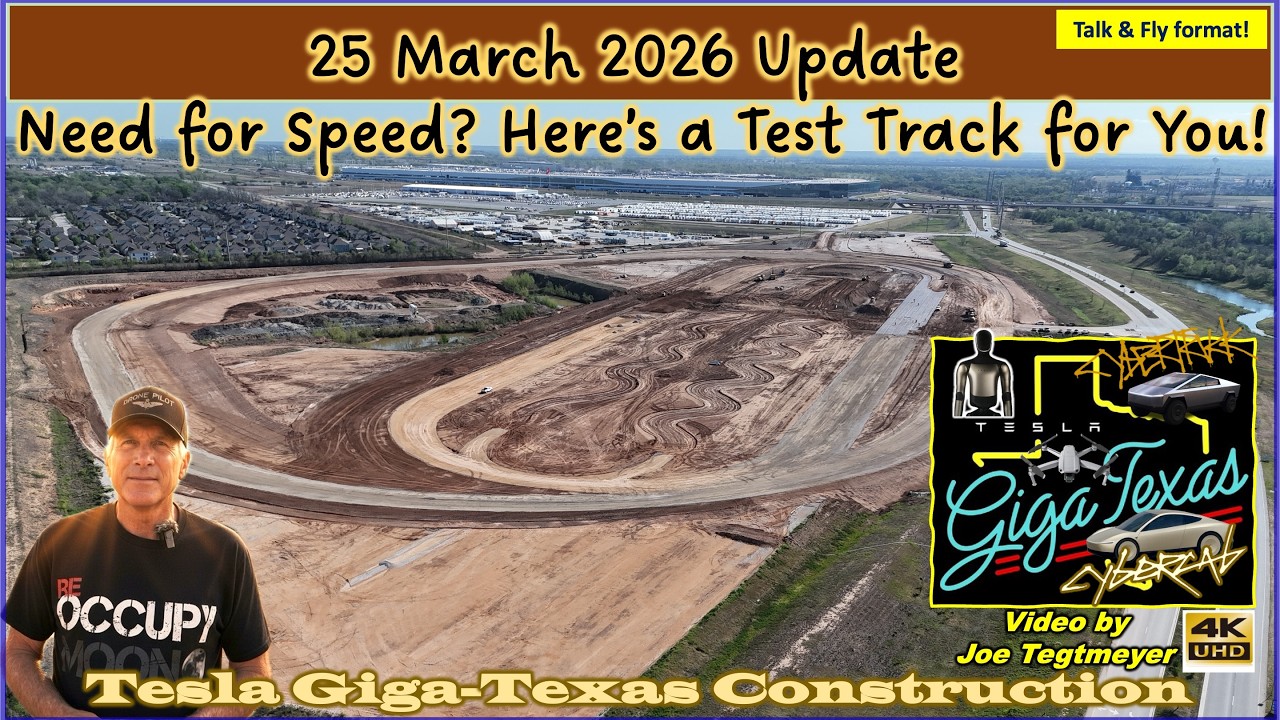
Tesla's Giga Texas facility where Cybercab production is ramping up ahead of the April mass production target. (Source: YouTube / Giga Texas drone footage)
The doors deserve their own paragraph. Soft-close, near-silent, and impressively controlled. The reviewer compared it to a Model X with Falcon doors — and said the Cybercab's doors were quieter. That's a meaningful bar. The door mechanism drops the window on open, raises it on close, and everything happens with a quiet, mechanical precision that doesn't feel cheap [3]. The hinge casting is described as "serious" — which tracks, because the whole door load runs through it.
What's missing? Power window switches (removed entirely), no seat adjustment controls beyond a fixed track, no cooling holes in the seat (smart for cleaning), and no car seat latch system. That last one is a deliberate design choice that tells you exactly what Tesla thinks this vehicle is for: short urban trips, not family road trips [1].
The Tech That Matters: AI4, Cameras, and the Screen
Tesla's hardware story is embedded in a few key details that don't make the flashy marketing slides. The Cybercab runs on Tesla's AI4 chip — the successor to the AI3 hardware that powers the current fleet. It's displayed on a demo trailer at the event, alongside the camera array that makes unsupervised FSD possible. The camera lenses are notably large, described as "elite" — these aren't the small, flush-mount sensors you see on most EVs. They're designed to handle the sensor demands of full autonomy without a human backup [4].
Inside, the centerpiece is a 21-inch touchscreen. That's it. No buttons, no switches, no driver controls. Just a big screen, an SOS button (with braille, so riders can find it by touch in the dark), and a single door-open button that also has braille integrated [3]. The interface simplicity isn't minimalism for aesthetics — it's minimalism because every control surface that doesn't exist is one less thing to break, clean, or explain to a confused rider.
The acoustics, surprisingly, are one of the most impressive things about sitting inside. With both doors closed in the middle of an SXSW crowd — people talking, foot traffic, ambient city noise — the interior was quiet enough to have a clear conversation using just a phone microphone [1]. The padded roof, soft-touch door panels, and carpeted surfaces absorb sound effectively. For a vehicle that will be ferrying strangers through downtown streets, that's not a small detail.
I would totally take this thing for a spin. This thing is ready for the roads.
— Tech YouTuber reviewing Tesla's production Cybercab at SXSW Austin
Then Zoox Showed Up
Amazon's Zoox dropped a popup at the same SXSW event, and the side-by-side comparison was immediately revealing. The reviewer had previously ridden in Zoox during its Las Vegas deployment and knew the vehicle well. Getting inside both in the same afternoon highlighted just how different two fully autonomous vehicles can feel [1].
Zoox's big differentiator: it's bidirectional. No front or back — it can drive either direction without turning around, which is a serious software and compute efficiency advantage in dense urban environments. The vehicle also has a glass roof/skylight, wireless charging, individual climate controls, and infrared cameras inside. What it doesn't have: a trunk. Zero luggage space beyond what fits in the cabin. If you're heading to the airport with a carry-on, you've got a problem.
The interior materials are similar to Cybercab's in philosophy — easy to clean, durable, public-transit vibes. But the feature set diverges in telling ways: Zoox gives each passenger climate control and music control; Cybercab centralizes everything through the touchscreen. Zoox has baby seat latch anchors; Cybercab doesn't. Zoox has wireless charging; Cybercab has USB-C ports but doesn't include cables [1].
Trunk: Cybercab ✅ | Zoox ❌
Wireless Charging: Cybercab ❌ (USB-C) | Zoox ✅
Glass Roof: Cybercab ❌ | Zoox ✅
Car Seat Anchors: Cybercab ❌ | Zoox ✅
Bidirectional Drive: Cybercab ❌ | Zoox ✅
Price (Consumer): Cybercab under $30K | Zoox not for sale
Business Model: Tesla sells + runs fleet | Amazon runs fleet only
Production Is Already Happening
While the SXSW display was the public-facing story, separate drone footage of Giga Texas tells the production story. More than 36 Cybercab units have been spotted on-site, a new test track is being constructed on the grounds, and Tesla is targeting mass production for April [2]. The reviewer at SXSW confirmed the units look "production ready" — not pre-production show cars with hand-assembled interiors, but consistent, repeatable manufacturing quality.
This matters because Tesla's competitors in the autonomous space — Waymo, Zoox — operate Level 4 and Level 5 autonomy but at small fleet scale. Waymo runs thousands of vehicles; Tesla is positioning to run tens of thousands, potentially hundreds of thousands, with a price point that makes consumer ownership viable alongside the robotaxi fleet model. That's a fundamentally different scale play.
Tesla also ran unsupervised FSD demo rides on Austin's busy SXSW streets — a blacked-out Cybertruck trailing behind as a safety vehicle, but no human in the driver's seat of the Cybercab doing the actual ferrying. The reviewer called it "gutsy." That's underselling it. SXSW streets during the festival are chaotic. Pulling that off without incident is a meaningful data point.
What This Actually Means for the Robotaxi Race
The robotaxi market is no longer theoretical. Waymo runs commercial service in multiple U.S. cities. Zoox is operating in Las Vegas. And now Tesla is ramping production and doing live FSD demos at one of the most chaotic public events in the U.S. calendar. The technology works well enough to deploy — the question is which deployment model wins [1][2].
Waymo's model: premium, heavily mapped, geofenced, expensive to scale. Zoox's model: purpose-built hardware, Amazon-funded, no consumer sales. Tesla's model: mass production, consumer ownership plus fleet hybrid, global ambition. Each approach has different risk profiles and different ceilings.
What the SXSW hands-on reveals is that Tesla's production Cybercab is not vaporware. The details — the acoustic performance, the consistent panel fit, the AI4 chip on display, the live FSD runs — all point to a company that has cleared the "can we build this?" phase and is now in the "can we build enough of these?" phase [4]. That's a different kind of challenge, and one Tesla has navigated before.
The Bottom Line
Tesla's Cybercab is real, it's in production, and it's impressive in the details that matter for a commercial vehicle: cleanability, acoustics, camera array, cost. The comparison with Zoox at the same event was an unexpected gift — two mature robotaxi platforms side-by-side, letting observers draw their own conclusions [1].
Neither vehicle is perfect. Cybercab needs wireless charging and cable provision for riders; Zoox needs a trunk. But both represent serious engineering — not concept show cars — and both are operating on public roads right now. The robotaxi era isn't coming. It's already here. The only question is whose name is on the door when it goes mainstream.