

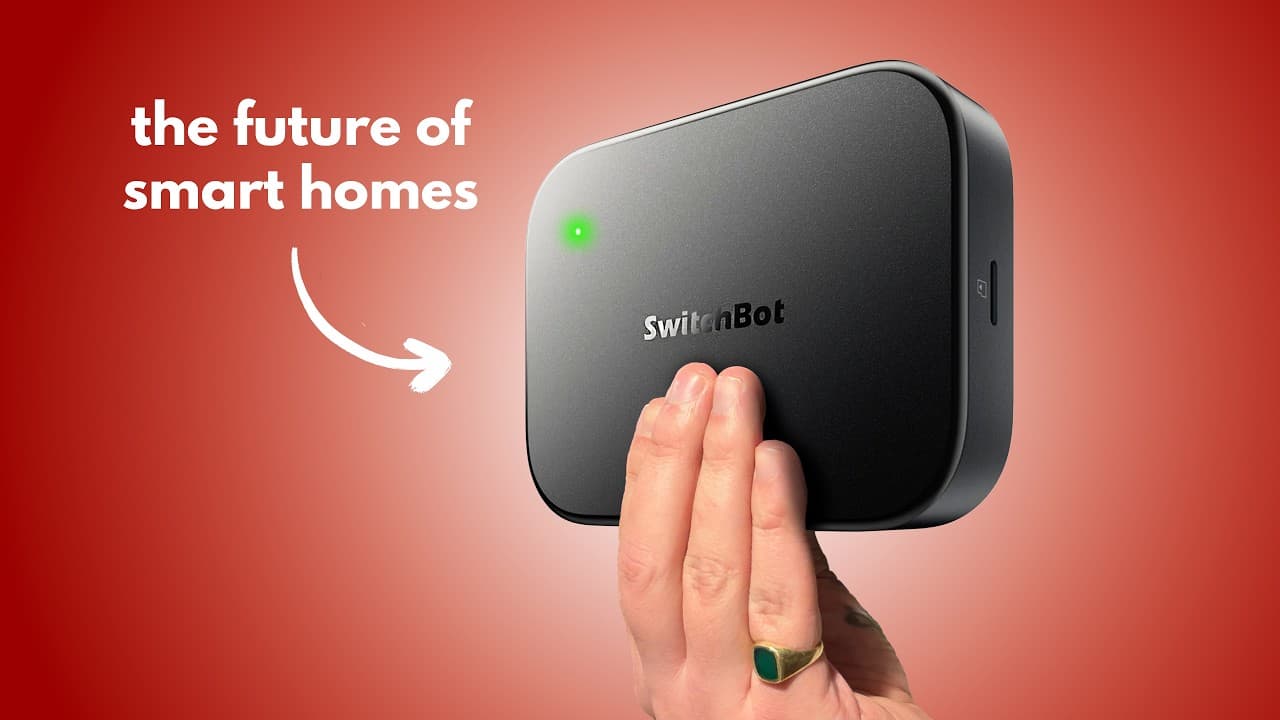
Your Smart Home Just Got a Brain
Smart home automation has always been stuck in a frustrating binary. Motion detected. Door open. Presence sensed. On. Off. The sophistication of your automation was ultimately capped by the bluntness of your sensors. A camera could tell you something moved — not what it was, what it was doing, or whether you should actually care [1]. SwitchBot changed that this month with the launch of their AI Hub. The device integrates a Vision Language Model (VLM) — essentially the visual reasoning layer that powers tools like Grok and ChatGPT, but applied to live camera feeds in your home. The result is a smart home hub that doesn't just detect events. It understands them.
What a VLM Actually Does
Here's the distinction worth understanding. A standard LLM (large language model) processes text. A VLM takes images and translates them into the same kind of rich contextual data your brain produces when you look at something. Point one at a photo and it doesn't say "figure detected" — it says "man in Tudor-style clothing, holding a quill, seated near a window with a castle in the background." Apply that to a live camera feed in your home and you get something genuinely new. Stu's Reviews, the UK-based tech YouTuber who did an in-depth first look at the AI Hub, tested exactly how far this goes [1]. The hub correctly identified him standing in his living room holding a bottle of wine and walking away through an arch. It identified a middle-aged man on the driveway, swinging an axe, noted the make and partial license plate of the vehicle nearby, and described the overall scene — the only miss being that it flagged the environment as "no visible hazards" (understandable, if also slightly concerning).