Six Years Later: Apple Drops AirPods Max 2 With H2 Chip, Same $549 Price — and the Same Problems
Apple surprise-announced the AirPods Max 2 with the H2 chip, bringing overdue feature parity with the AirPods Pro 3. The price stays at $549. So does the 20-hour battery, the sports-bra case, and everything else. Six years between revisions, and the biggest change is the brain inside.
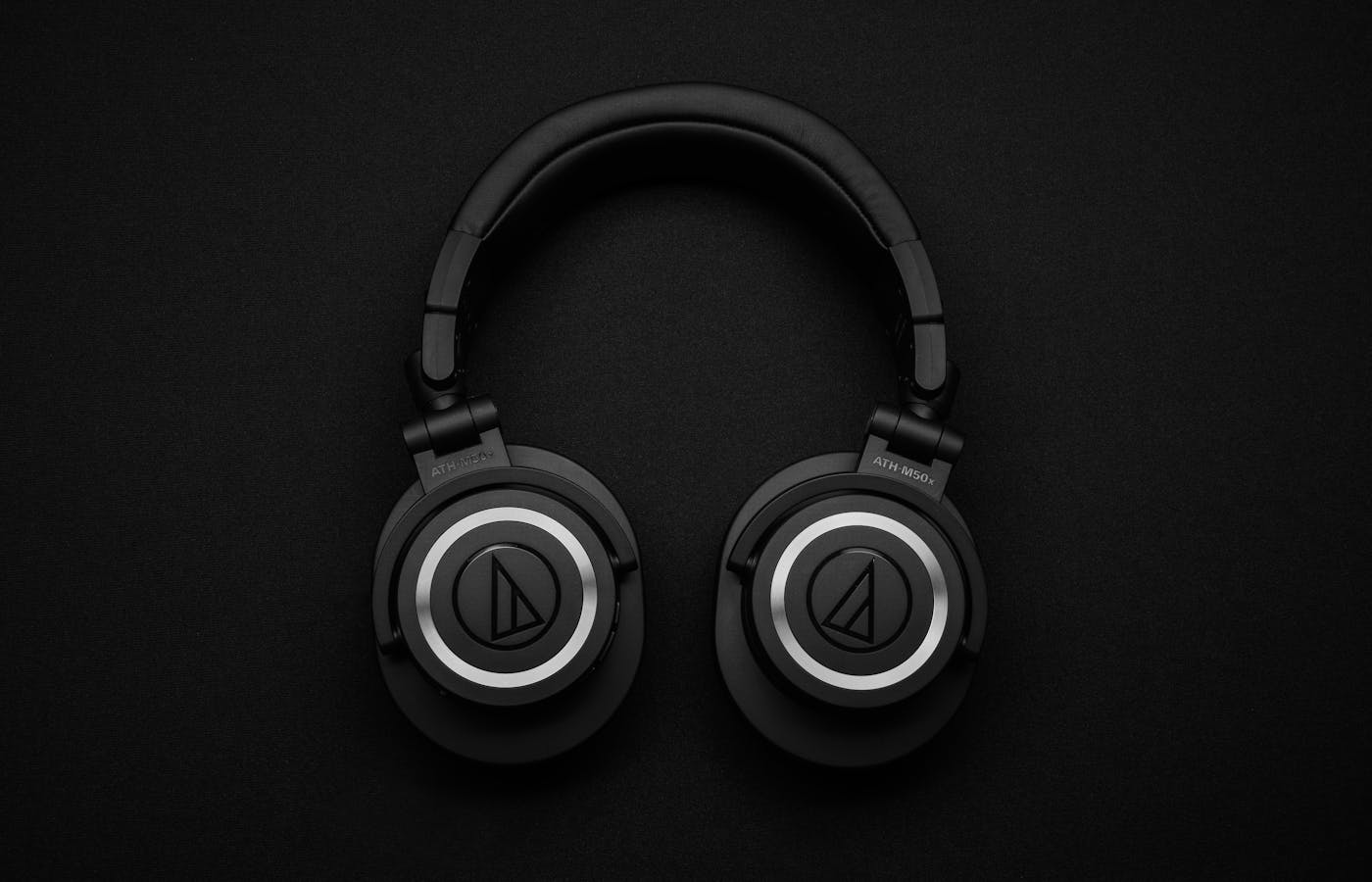
Premium over-ear headphones resting on a wooden desk next to a laptop
Key Points
•Apple surprise-announced AirPods Max 2 with the H2 chip — the same silicon in AirPods Pro 3 — bringing 1.5x better ANC, adaptive audio, and personalized spatial audio to the over-ear lineup
•The industrial design is identical to the 2020 original: same weight, same 20-hour battery, same Smart Case, no IP rating, while Sony and Bose push past 24-30 hours
•The H2 chip is a genuinely meaningful upgrade for computational audio features, finally closing the embarrassing gap where Apple's $249 earbuds outperformed its $549 headphones
•The $549 price creates an awkward comparison with Apple's own $599 MacBook Neo — an entire laptop for fifty dollars more than a pair of headphones
The surprise nobody predicted
Apple doesn't do surprise product announcements often, and when it does, the tech press tends to notice. This one slipped through every major leak pipeline. Bloomberg's Mark Gurman, who has spent the better part of a decade with near-perfect Apple prediction accuracy, had the AirPods Max 2 penciled in for a 2027 refresh at the earliest. The supply chain analysts in Asia who track component orders months in advance showed no signal. [1]
And yet, here they are. Apple quietly updated its website on March 16 with the AirPods Max 2, complete with product pages, spec sheets, and a pre-order date. No keynote. No "one more thing." Just a press release and a webpage.
The stealth approach mirrors Apple's broader 2026 strategy. The company launched five new products this spring — MacBook Neo, iPhone 17e, iPad Air M4, AirPods Max 2, and the refreshed Apple TV — without a single keynote event. It's either supreme confidence or a tacit admission that none of these products are exciting enough to carry a presentation.
What the H2 chip actually changes
The H2 chip is the headline upgrade, and it deserves credit for what it enables. Active noise cancellation improves by roughly 1.5x over the original's W1/H1 combination, according to Apple's claims. In practical terms, that means better isolation in challenging environments — airplane cabins, open offices, city streets — where the original AirPods Max already performed well but occasionally let low-frequency rumble through. [1][2]
Adaptive audio is the more interesting addition. This is the feature that dynamically blends noise cancellation and transparency mode based on your environment — quieting a loud subway but letting through a barista calling your name. It debuted on the AirPods Pro 3 and works remarkably well in that form factor. On over-ear headphones with larger drivers and better passive isolation, the effect should be even more pronounced.
Personalized spatial audio, conversation awareness, and real-time language translation (through integration with Apple Intelligence) round out the software features. These are genuine quality-of-life improvements that move the AirPods Max from "really good headphones" to "smart headphones" in ways that justify the computational silicon.
The new high dynamic range amplifier is the less discussed but potentially more impactful upgrade for audiophiles. Apple claims it delivers cleaner reproduction across the full frequency range, with less distortion at high volumes and better detail retrieval in complex musical passages. Without independent measurements, those claims are hard to verify — but Apple's audio engineering team has historically been conservative with its specifications, and the original AirPods Max measured well above its consumer-headphone class. [2]
The H2 chip brings computational audio features that were previously exclusive to AirPods Pro 3 — but the physical design hasn't changed since 2020.
The elephant in the room: everything that didn't change
Here's where the enthusiasm hits a wall. Twenty hours of battery life was impressive in 2020. In 2026, it's a liability. Sony's WH-1000XM6 delivers 30+ hours. The Bose QuietComfort Ultra manages 24 hours. Even mid-range competitors from Sennheiser and Jabra routinely hit 25-30 hours. Apple's decision to keep battery life flat for six years, while competitors pushed past the 30-hour mark, suggests either a design constraint they couldn't solve or a calculated bet that their user base doesn't care.
SoundGuys, one of the most respected audio review outlets, was blunt in their initial reaction: "After six years, the battery is still 20 hours. That's not acceptable at this price." Their assessment reflects a broader frustration in the audio review community — the feeling that Apple is coasting on brand loyalty and ecosystem lock-in rather than competing on specifications. [2]
SaranByte's review was slightly more generous but still pointed: "They've done the bare minimum here." The H2 chip makes the AirPods Max 2 "actually decent" on the computational features front, bringing them to parity with the AirPods Pro 3 — but the physical product is essentially the same headphone with a better brain inside it. [1]
The Smart Case remains unchanged. The design that leaves the headband exposed, that offers no meaningful drop protection, that became an internet punchline within hours of its original reveal — Apple kept it. Six years of memes, and the case is the same. It's either stubbornness or a genuine belief that the case isn't the problem everyone says it is.
No IP rating means these are still headphones you probably shouldn't wear to the gym. No Bluetooth 6.0 means they miss out on the improved range, lower latency, and better multi-device connectivity that the newer standard enables. The USB-C port (upgraded from Lightning on the original) is welcome but hardly a selling point in 2026 — it's the bare legal minimum in most markets.
The $549 question
Price is where this gets genuinely interesting. Apple held the line at $549 — the same price as the original AirPods Max in December 2020. No increase, but no decrease either.
In isolation, $549 for premium over-ear headphones isn't outrageous. Focal, Audeze, and other audiophile brands charge significantly more for their flagship wireless models, and the Apple ecosystem integration that the AirPods Max offers is genuinely unmatched.
But Apple created its own problem in March 2026. The MacBook Neo, launched the same week, starts at $599. That's an entire computer — display, keyboard, trackpad, macOS, Apple Intelligence, 8GB of RAM, and the A17 Pro-derived chip — for fifty dollars more than a pair of headphones. The value proposition comparison is brutal, and it's one Apple made for itself.
The competitive landscape has shifted too. Sony's XM6, widely regarded as the best overall wireless headphones on the market, retails for $399. The Nothing Headphone A, which has been earning rave reviews for its sound quality and battery life, comes in under $300. Apple's premium over competitors has always existed, but at $549 with a 20-hour battery and a six-year-old industrial design, the gap is harder to justify.
Who should actually buy these
The AirPods Max 2 make the most sense for a specific user: someone already deep in Apple's ecosystem who values seamless device switching, spatial audio for Apple TV content, and the computational audio features enabled by the H2 chip. If you bounce between an iPhone, a Mac, and an Apple TV daily, no competitor matches the integration.
They also make sense as an upgrade for original AirPods Max owners who've been waiting six years for a refresh. The H2 chip, improved ANC, and adaptive audio represent meaningful functional improvements over the original.
For everyone else — including anyone who exercises with their headphones, travels frequently and needs long battery life, or simply wants the best-sounding headphones regardless of ecosystem — the competition offers more for less.
The bigger pattern
The AirPods Max 2 fit a broader Apple pattern in 2026: meaningful internal upgrades delivered in unchanged external packages. The iPhone 17e got a better chip but the same form factor philosophy. The iPad Air M4 got silicon improvements without a redesign. Apple is in an optimization cycle, not an innovation cycle.
That's not inherently bad. Optimization cycles produce reliable, refined products. But they don't produce excitement, and they don't justify premium pricing when competitors are genuinely innovating on battery technology, materials, and features.
Apple's bet is that the H2 chip's computational audio features — the kind of things that get better over time through software updates — matter more than battery life or industrial design changes. It's a defensible argument for a technology company. It's a harder argument for a company that charges $549 for headphones in the same week it sells a laptop for $599.
The AirPods Max 2 are better headphones than the originals. The H2 chip is a real upgrade. But six years between revisions, with no design changes, no battery improvement, and no price reduction, feels like a company that knows its customers will buy whatever it ships. And honestly? They probably will.