
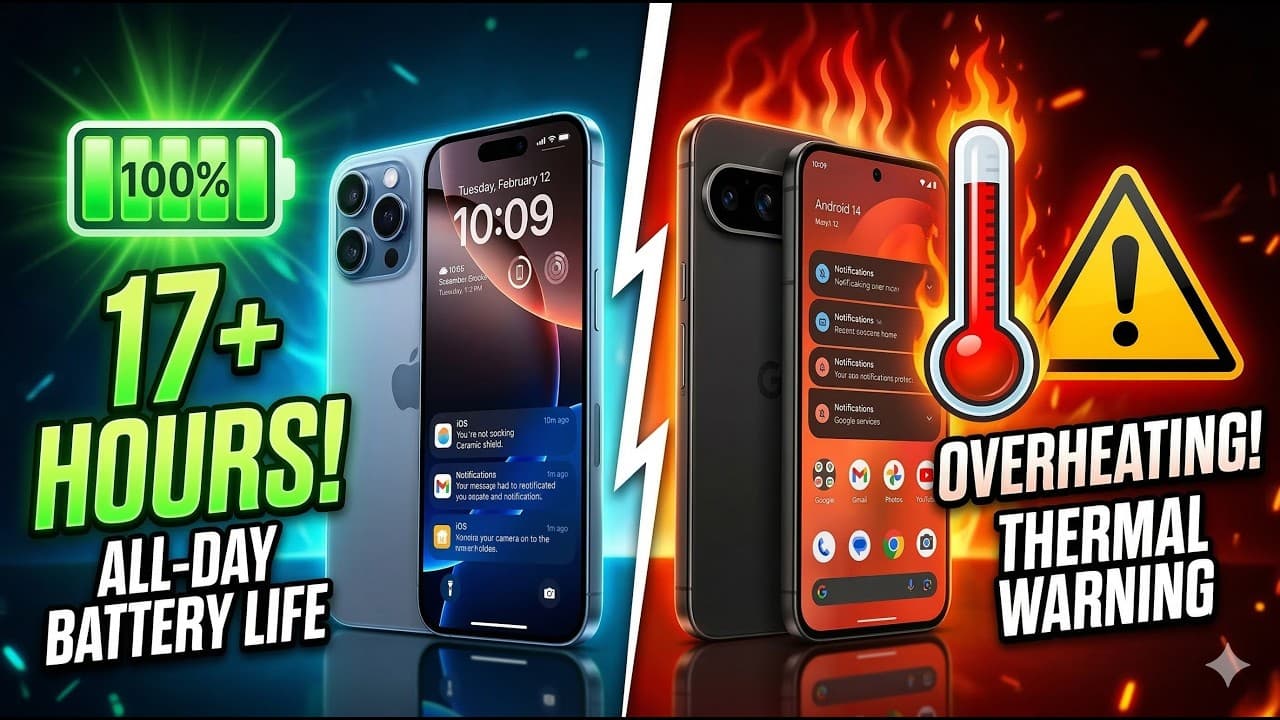
Every year, Signal Shift does one comparison video that cuts through the noise — and their latest iPhone 17 Pro Max vs Pixel 10 Pro XL breakdown landed as one of the most revealing flagship face-offs in recent memory [1]. Not because one phone destroyed the other (it kind of did), but because the numbers exposed something deeper: two completely different bets on what a phone should actually be. Apple bet on hardware supremacy. Google bet on software resilience. And the results of those bets are playing out in ways that will define the next 12 months of the smartphone market.
The Chip Gap Is a Canyon
Let's start where Signal Shift started: the chips. Apple's A19 Bionic vs Google's Tensor G5. And the Geekbench scores tell an immediate story [1]. Single-core performance — the number that determines how snappy your phone feels every single day — is 58% faster on the iPhone. That isn't a marginal bump. That's the difference between an app feeling instant and an app feeling like it's thinking. Every tap, every scroll, every task switch — that gap is there, every time. Multi-core performance follows a similar trajectory. The Tensor G5 isn't slow in any objective sense, but in relative terms, it's getting outrun in a category where Google needs to compete. The more significant gap, though, is architectural. Apple's A19 includes hardware-accelerated ray tracing — dedicated circuitry that handles the complex lighting calculations required for next-gen games. The Tensor G5 doesn't have it [1]. Right now, that's a niche spec. In 12 months, when more titles are built specifically around hardware ray tracing, Pixel users will feel the absence. It's the kind of missing feature that doesn't hurt you today and quietly hurts you later.