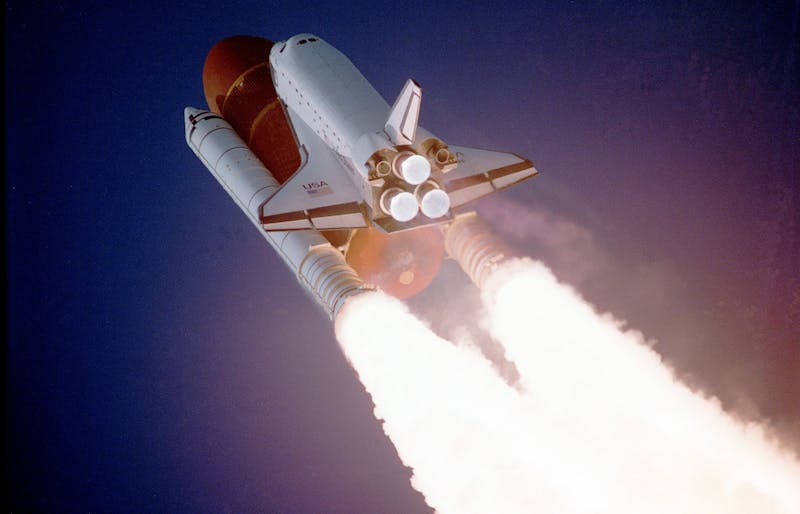


Jensen Huang Wasn't Kidding When He Said "Everywhere"
For three years, Jensen Huang has been telling the world that AI computing needs to be everywhere — in data centers, on factory floors, at the network edge, inside autonomous vehicles. At GTC 2026, he added one more location to the list: orbit. Nvidia announced the Vera Rubin Space-1, a radiation-hardened AI chip system designed to operate in space. Not conceptually. Not as a research prototype. As a commercial product with paying customers already lined up. "Space computing has arrived," Huang declared from the GTC stage, and for once, the bombast matched the substance [1]. The Space-1 isn't a repurposed data center GPU bolted onto a satellite. It's a purpose-built system that addresses the three fundamental challenges of orbital computing: radiation, power, and thermal management. Space is hostile to electronics. Cosmic rays flip bits. Temperature swings between -150°C and 150°C happen every 90 minutes as a satellite moves between sunlight and Earth's shadow. There's no air conditioning, no power grid, and no technician who can reboot the server when something goes wrong [2]. Nvidia's solution is a ground-up redesign that hardens the Vera Rubin architecture for these conditions while delivering 25 times the performance of an H100 GPU — the same chip that currently anchors most of the world's AI training infrastructure on the ground [2].