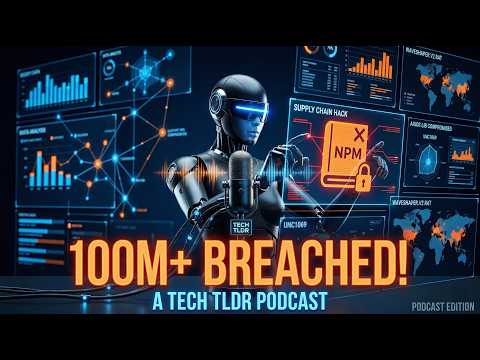

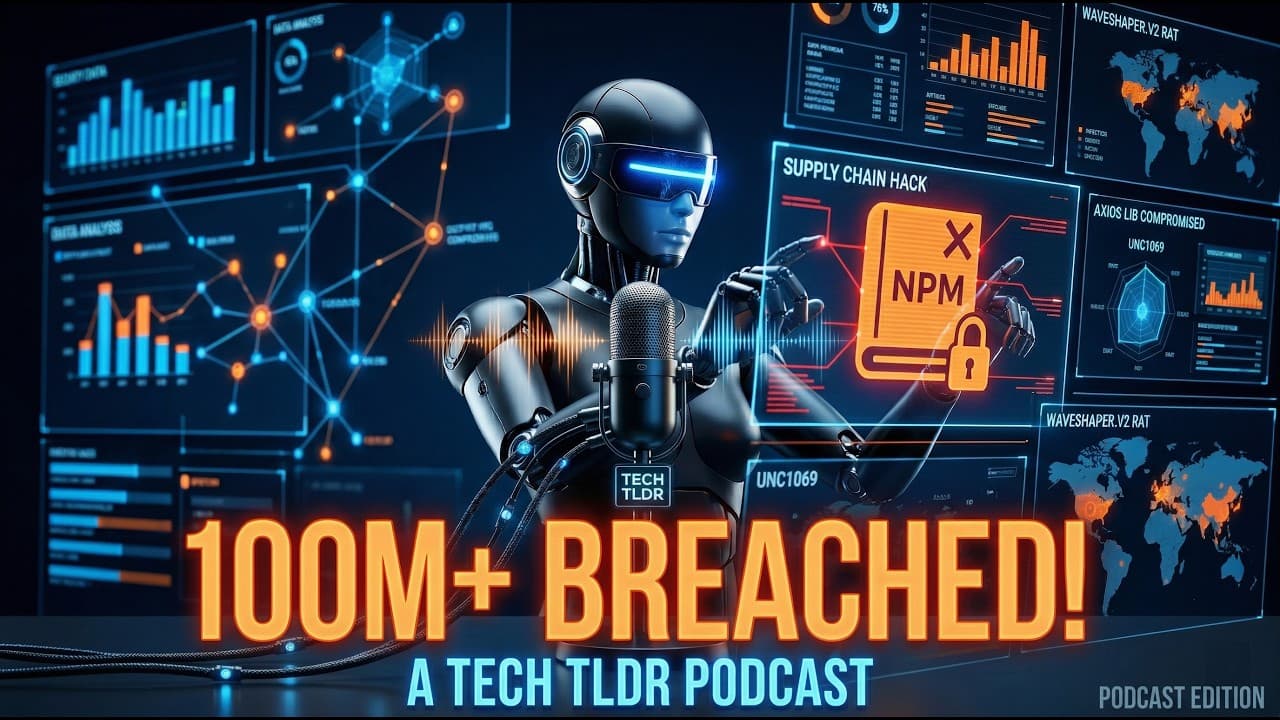
Two Words. Full Compromise.
Imagine you type npm install into your terminal. Muscle memory. You've done it a thousand times. This time, 1.1 seconds later — before your screen even registers the command finished, before you get your prompt back — a North Korean cyberunit has established full, unmitigated access to your machine. And by extension, your company's production servers. Your terminal just said: "added 1 package, audited 1,200 packages in 3 seconds. found 0 vulnerabilities." That's what happened on March 31, 2026, when attackers hijacked the Axios npm package. For 2–3 hours, one of the most downloaded JavaScript libraries on the planet was delivering state-sponsored malware to developers worldwide. [1]
Why Axios. Why Now.
If you write JavaScript, TypeScript, or maintain basically any modern web app, you have Axios in your project. It's the HTTP client everyone reaches for. Over 174,000 public GitHub projects depend on it directly. Wiz's cloud scanning found it present in roughly 80% of all cloud and code environments [1][2]. That footprint is exactly why it was targeted. The Byte-Size Tech News TLDDR podcast — which published a deep technical breakdown of the incident sourced from Sonatype, Step Security, Google Cloud Threat Intelligence, and the SANS Institute — framed it with a perfect analogy: most supply chain attacks are like poisoning someone's individual coffee cup. Compromising Axios is like poisoning the municipal water supply. If you turn on the tap, the poison is in your system — regardless of how secure your own infrastructure is. [3] The transitive dependency problem makes it worse. You might not even have axios in your own package.json. But if any tool you installed depends on it — and most do — you drank the water.