No Sponsors, No BS: The Gadgets Actually Flying Off Shelves in March 2026
Tech YouTuber Eric from WTE Technology Solutions dropped a rare fully unsponsored gadget roundup — no affiliate links, no brand deals — just a dev's honest take on what's actually selling in March 2026. From DJI's best entry-level drone to the Meta Quest 3S redefining how we think about web design, here's what the algorithm isn't paying anyone to tell you.
WTE Technology Solutions — March 2026 gadgets that are actually worth buying
Key Points
•Unsponsored gadget picks are rare on YouTube — WTE Technology Solutions' Eric explicitly called out zero affiliate links or brand deals, making this a genuine consumer signal
•The Fire TV Stick 4K Max surge is real: older Fire Sticks and Rokus are being "bricked" as streaming apps outgrow low-powered hardware
•DJI Neo is the entry-level drone recommendation for 2026 — compact, beginner-friendly, and under $500 before you need an FAA certification
•Meta Quest 3S is picking up steam as an affordable AR/VR headset — and Eric made a case that VR-compatibility could become a Google ranking factor by 2027
•The gadget fringe (hydrogen robots, AI chess coaches, minimalist phones) often predicts where mainstream products go in 2–3 years — and that pipeline is accelerating
The Unsponsored Gadget Problem
Here's something you don't hear often enough in tech YouTube: "I'm not getting paid for any of these." No affiliate links. No brand deals. No kickbacks buried in the description.
That's how Eric from WTE Technology Solutions opened his March 2026 gadget roundup — and it's the reason I'm writing about it. [1]
Most gadget coverage is pay-to-play at some level. Not always maliciously — creators have bills, and affiliate programs are how YouTube tech channels survive. But when you want to know what's actually selling, what consumers are genuinely excited about, the unsponsored take is gold. Eric's picks are based on what he's personally watching fly off shelves, what he's testing himself, and what he thinks is worth your money right now. That's the lens I want to run these through.
Eric from WTE Technology Solutions dropped a fully unsponsored look at what's actually worth buying in March 2026. No affiliate links, no brand deals.
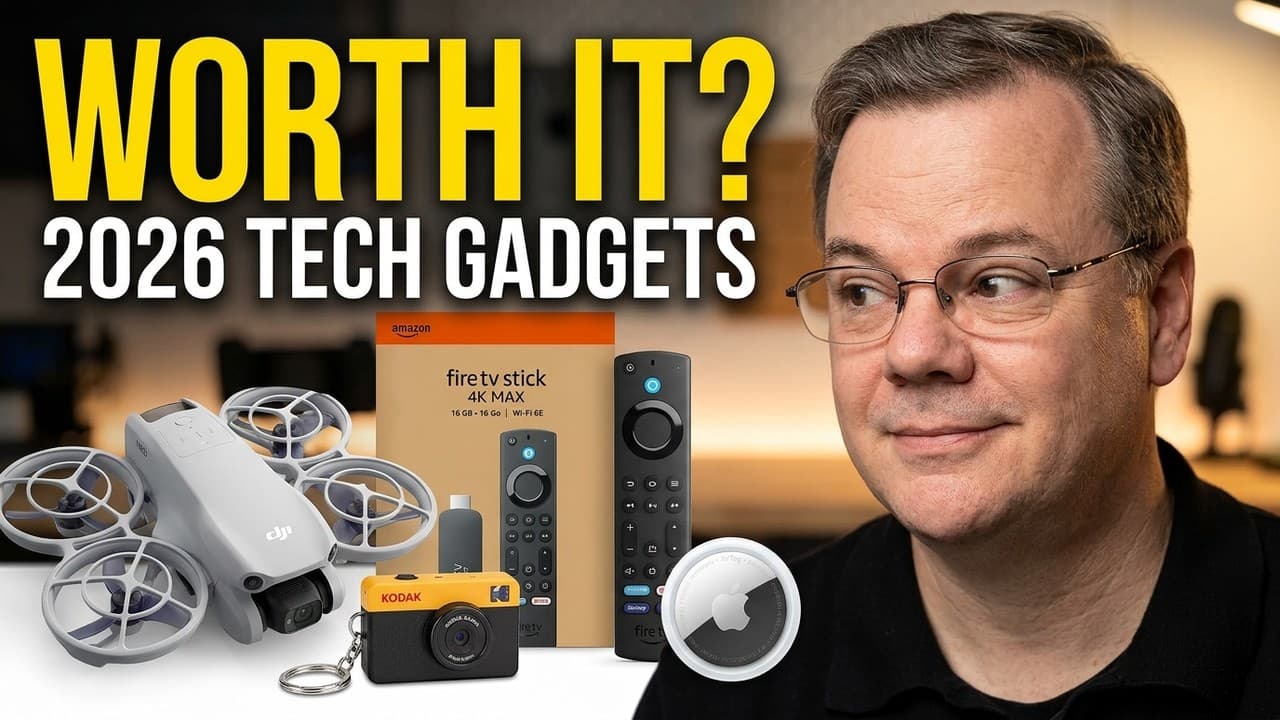
First up: the DJI Neo. Eric's recommendation for anyone getting into drones in 2026, and his reasoning is sharp. The Neo is compact, beginner-friendly, and priced well under $500 — which puts it in "birthday gift for a teenager" territory without landing you in "oops I crashed a $1,200 drone" territory. [1]
The bigger point he makes is about the licensing reality of consumer drones. Once you step up to larger DJI models, you're in FAA registration and certification territory. The Neo keeps you under those thresholds while still delivering a genuinely capable camera platform. For someone who wants to learn drone operation, understand airspace rules, and develop actual flying skills before committing to a serious rig, it's the right starting point.
This tracks with what I've seen across dev communities too — a lot of hobbyist and indie filmmaker types are using the Neo for aerial B-roll because it hits the sweet spot of capable-enough and crash-recoverable.
Your Streaming Box Is Probably Dying
The Fire TV Stick 4K Max recommendation came with a warning that more people need to hear: your old streaming stick might already be dead. [1]
Eric flagged something interesting here — a lot of the older Fire Sticks and entry-level Rokus have effectively been "bricked" in the past year. Not literally broken, but functionally obsolete. Streaming apps keep getting heavier. The Olympics coverage last year was apparently the breaking point for a lot of people — they couldn't stream the high-quality video their older hardware just couldn't handle anymore.
This is a legitimate issue that the streaming companies don't advertise. When Netflix, Disney+, or Amazon push an app update, they're building for current-generation hardware. Devices from three to four years ago quietly fall off the optimization curve. The 4K Max is Eric's recommendation because it's spec'd well enough to stay relevant for several more years. Given that the cheaper alternatives in the category are already showing cracks, spending the extra $20-30 for the Max variant makes sense.
The Nostalgia Hit and the Transparent Power Bank
Two products on Eric's list that caught my attention for different reasons.
The Kodak Chimera is pure nostalgia play — a keychain-style compact camera riding the aesthetic wave of film photography culture that's been building for a few years now. Eric's seeing real pickup on it. The market for "not-your-phone camera" has been expanding steadily among younger buyers who want photography to feel like an event rather than a reflex. The Chimera hits that vibe at an accessible price point. [1]
The Chargeek 170 is the opposite of nostalgia — it's the "show your work" school of hardware design. Transparent housing, triangle form factor, OLED display. At $119 Eric acknowledges you're partly paying for the aesthetic. But you're paying for good aesthetic on something that's well-made and functional. In a world where most power banks are identical-looking black rectangles, this one gets conversation at the coffee shop. For the target buyer — tech enthusiast, wants their gear to look interesting — it delivers. [1]
The Best Budget Android and the Tracker You Actually Need
Eric's budget Android pick for 2026 is the Google Pixel 10A, and his reasoning cuts right to the thing most buyers miss: software support. [1]
He makes a point that I've made plenty of times — a lot of Android phones in the budget category are cheap because the manufacturer doesn't invest in keeping them updated. You buy a $250 Motorola or off-brand Android, and in two years you're either running an outdated OS or the company has quietly stopped patching it. Google, Samsung, and to a lesser extent Motorola are the brands he trusts for long-term support. The Pixel 10A gets you Google-quality AI features, camera software, and guaranteed OS updates at the budget tier. For anyone who asks me what phone to get their parents or a college student on a budget — this is the current answer.
On trackers: Eric mentioned the expanding AirTag ecosystem — including Ridge's credit-card-slim tracker, which he personally runs in his wallet. His broader point is that the thin, credit-card-sized tracker category has matured significantly. Battery life is solid now, the Bluetooth/UWB integrations are reliable, and the use case (keys, wallet, backpack) is universal enough that there's no reason not to have at least one. Worth picking up whenever you're already ordering something online.
Apple Watch Series 11 and the Health Tracking Arms Race
The Apple Watch Series 11 pick isn't surprising — Apple has methodically turned the Series into the go-to health monitoring platform, and the 11 continues that trajectory. Eric's take is that for anyone who's health-focused (dieting, fitness tracking, monitoring specific biomarkers), it's the current top-tier recommendation without question. [1]
What I'd add: the Apple Watch's strength is ecosystem lock-in done right. If you're already iPhone, iOS, and App Store, the Series 11 integrates seamlessly in ways that no Android watch can match on the Apple side. Garmin still wins for serious athletes and runners. But for the general health-conscious consumer who wants passive tracking, alerts, and AI-driven health insights? Series 11 is the product.
Meta Quest 3S and the Coming VR Web Optimization Wave
The Meta Quest 3S recommendation comes with an angle I didn't expect from a gadget roundup video — and it's the most developer-relevant thing Eric said in the whole video. [1]
Yes, the Quest 3S is the affordable entry into Meta's current AR/VR ecosystem. Yes, it's great for gaming and web browsing in mixed reality. But Eric's real point was aimed at business owners and web developers: start optimizing for VR headsets now, because it may become a Google ranking signal by 2027.
Specifically, he flagged SVG graphics (vs. standard PNGs) and 2x display density support as things to get right immediately. The argument is that Google and AI search platforms are already beginning to weight VR compatibility in results — and that by 2026-2027, being a "VR-compatible website" could genuinely affect your search visibility. His evidence is anecdotal (he's "starting to see it in stats"), but the underlying logic is sound. Two major headset platforms — Quest and Apple Vision Pro — have enough combined install base to start moving the needle on web traffic metrics. Developers who build for the VR browser now won't be scrambling later.
Tech Saul Gadgets covered the weirder end of the 2026 gadget spectrum — including a hydrogen-powered robot dog and an AI chess coach with a real robotic arm. (Source: Tech Saul Gadgets / YouTube)
From the Fringe: What Weird Gadgets Tell Us About Where We're Headed
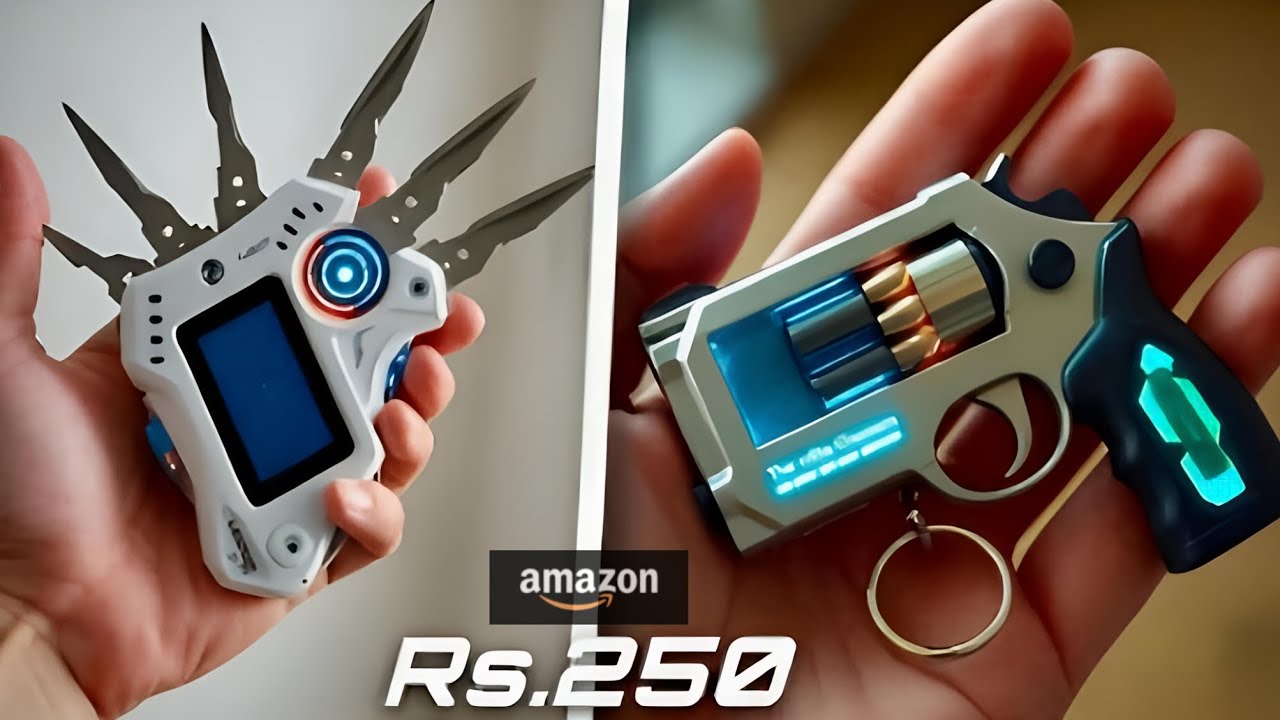
While Eric's picks represent the mainstream-adjacent gadget market, the Tech Saul Gadgets channel went further out on the edge — and it's worth paying attention to what's out there, because today's weird gadget is often tomorrow's mainstream product category. [2]
Sense Robot Chess: An AI robotic chess coach with a physical robotic arm that moves real pieces on a real board. 25 difficulty levels — it'll play like a beginner if you need it to, or crush you at grandmaster level. This is the "AI tutor with a physical presence" concept applied to board games. Expect this to expand to other skill-learning contexts.
Kawasaki Corlio: A hydrogen-powered robotic quadruped. Four legs, eco-friendly fuel source, Transformer movie aesthetics. The fact that a mainstream manufacturer like Kawasaki is shipping hydrogen-powered robots to consumers is genuinely significant — it means the supply chain for this technology is now consumer-ready.
Light Phone 3: A minimalist phone with a black-and-white display and deliberately no distracting apps. The digital detox phone category is real and growing. As ambient AI and notifications get more aggressive, the demand for intentional low-stimulation devices increases.
Hohem iSteady M7 Gimbal: A smartphone gimbal with a detachable remote control that works from 10 meters. The content creator toolkit keeps getting more capable and more accessible. Worth noting for anyone doing solo video work — the remote solves the "I can't reach my phone when I'm in frame" problem cleanly.
The pattern across these fringe picks is the same every year: products that look like novelties are actually early signals. Robotic chess coaches predict AI tutoring hardware. Hydrogen quadrupeds predict the energy infrastructure for consumer robotics. Minimalist phones predict the backlash to smartphone maximalism that's going to shape a product category in 3 years.
Eric's picks tell you what's selling now. Tech Saul's picks tell you what will be normal then. Both are worth tracking.
The Bottom Line
If you're buying tech in March 2026, here's the distilled version: upgrade your streaming stick if it's more than three years old (4K Max is the move), get a Pixel 10A if you need a reliable budget Android, and start paying attention to Meta Quest 3S as the entry point into a mixed reality ecosystem that's about to start affecting more than gaming.
For developers specifically: the VR web optimization note is a genuine early warning. SVG graphics, 2x density support, and responsive layouts that work inside a headset browser are things you can implement now without disrupting your existing site. Do it before it's a ranking factor rather than after.
And for anyone who just wants something cool for the desk: the Chargeek 170 is worth the $119 purely on vibe. Some purchases are allowed to just look good.
Thanks to Eric at WTE Technology Solutions and Tech Saul Gadgets for the unfiltered looks at what the gadget market actually looks like in early 2026. Both videos are linked in the references below — worth watching in full.