Meta Just Made Smart Glasses for the Billions Who Actually Need Glasses
Meta launched two new Ray-Ban smart glasses built from the ground up for prescription wearers — and at $499, they might be the move that turns AI glasses from a novelty into a necessity.
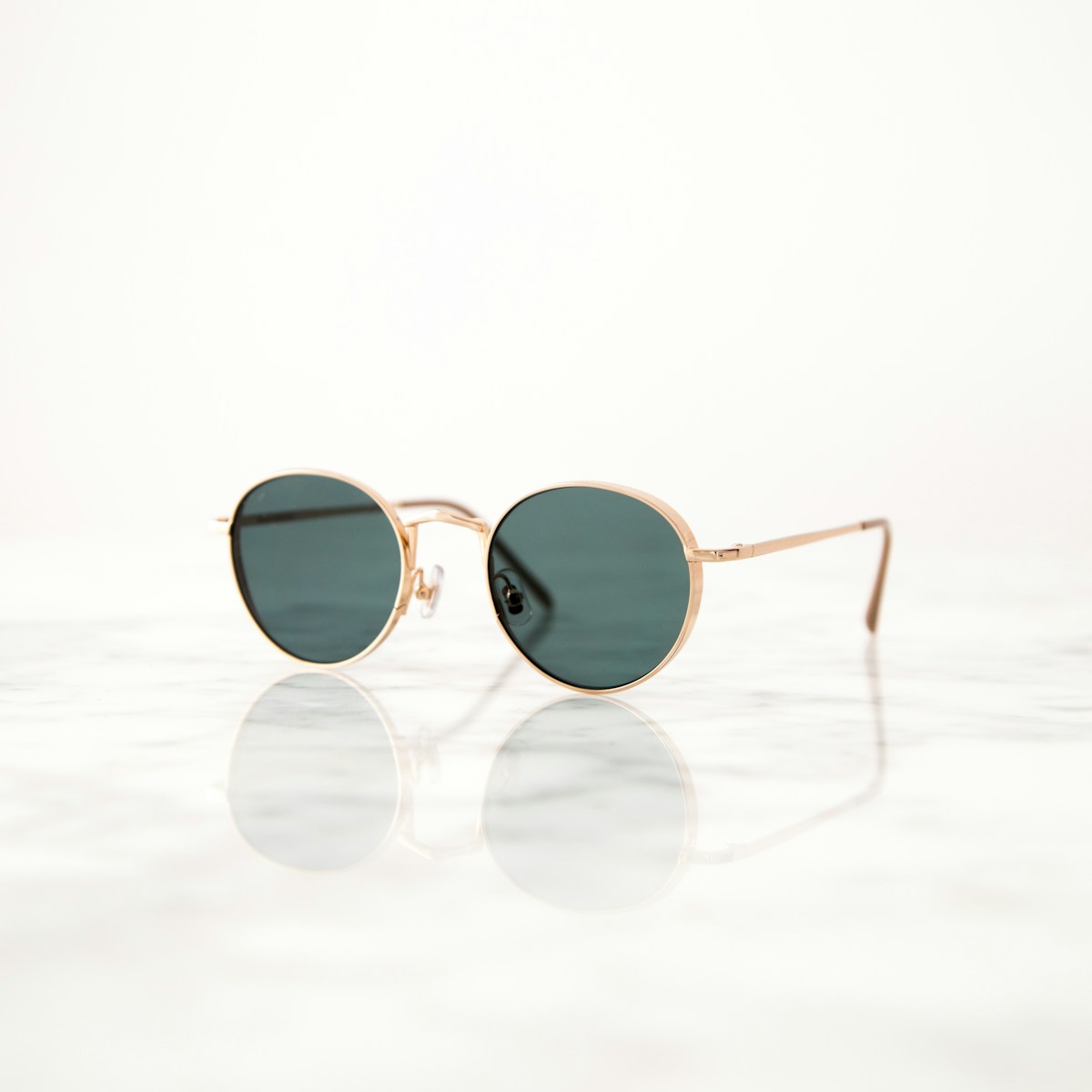
Smart glasses with technology overlay, representing the fusion of eyewear and AI computing
Key Points
•Meta launched Ray-Ban Meta Blayzer Optics and Scriber Optics — the first smart glasses designed specifically for prescription wearers
•At $499, the glasses are price-competitive with premium prescription frames while adding AI features like real-time translation and nutrition tracking
•Meta controls 76% of the smart glasses market, and this move targets the billions of people who actually need corrective lenses
•New AI features include hands-free WhatsApp summaries, neural handwriting, and on-device processing for privacy
The Biggest Problem With Smart Glasses Was Never the Tech
Here's a number that should make every tech company pay attention: roughly 4.2 billion people worldwide wear some form of vision correction. That's more than half the planet's population walking around with glass or plastic strapped to their faces because they literally can't see without it.
And until this week, the smart glasses industry had essentially been telling those people: figure it out yourself.
Meta just changed that. On March 31, the company launched two new Ray-Ban smart glasses — the Blayzer Optics and Scriber Optics — that are built from the ground up for prescription wearers [1]. Not adapted. Not modified. Designed specifically for the billions of people who need corrective lenses to function.
The glasses start at $499, are available for preorder now, and hit optical retailers in the U.S. and select international markets on April 14 [2].
It sounds like a product announcement. It's actually a strategic pivot that could define the next decade of wearable computing.
Prescription eyewear is a massive global market — and smart glasses have largely ignored it until now.
What's Actually New
The two styles serve different aesthetics: Blayzer is rectangular and comes in Standard and Large sizes, while Scriber has a rounder frame [1]. Both include the kind of details you'd expect from premium prescription frames — overextension hinges, interchangeable nose pads, and temple tips that opticians can adjust to your specific face shape [2].
This matters more than it sounds. Previous smart glasses, including Meta's own earlier Ray-Ban Meta models, could technically accept prescription lenses. But they weren't designed around the constraints of corrective optics. The frames were optimized for electronics first, comfort second. For someone who wears glasses 16 hours a day, that's a dealbreaker.
Meta says these are "the most comfortable glasses we've ever designed" [1], which is the kind of marketing speak that usually means nothing — except that in this case, comfort is the entire value proposition. If prescription wearers won't keep them on all day, the AI features are useless.
The glasses support "nearly all prescriptions," according to Meta, though individual retailers may still have some restrictions [3]. That's a significant claim — it means Meta isn't just targeting people with mild myopia. They're going after the full range of corrective lens users.
The iPhone Strategy for AR
Here's why this matters beyond just another hardware launch: Meta is executing what you might call the iPhone strategy for augmented reality.
When Apple launched the iPhone in 2007, it wasn't the first smartphone. It wasn't even the first touchscreen phone. What Apple did was make the smartphone useful enough that people who didn't think they wanted one suddenly couldn't live without it.
Meta is doing the same thing with smart glasses — but instead of making the technology irresistible, they're making it invisible. You already wear glasses. You already need glasses. What if those glasses could also take photos, translate languages in real time, log your meals, summarize your WhatsApp messages, and give you turn-by-turn navigation — all without you changing a single habit?
That's the pitch. And at $499, it's a compelling one. Premium prescription frames from brands like Oliver Peoples or Persol regularly run $300-$500 before you add lenses. Meta is essentially saying: for the same money, you can have the frames plus an AI computer on your face [2].
The Software Is the Real Story
The hardware gets the headlines, but the software updates Meta announced alongside the new frames tell you where this is really going.
First, there's AI-powered nutrition tracking. Take a photo of your meal or describe it by voice, and Meta AI logs the nutritional details in the Meta AI app [1]. Over time, it builds a food diary that can answer questions like "What should I eat to increase my energy?" based on your actual eating patterns. It's the kind of feature that sounds gimmicky until you realize it solves a real problem — most people abandon food tracking apps because manually logging every meal is miserable.
Then there are hands-free WhatsApp summaries. Ask "Hey Meta, catch me up on my messages" and you get a concise summary of your group chats, processed on-device with end-to-end encryption [2]. In an era where group chat overwhelm is a real phenomenon, this is genuinely useful.
Neural Handwriting is expanding to iMessage — write with your finger on any surface and the glasses translate it into text messages across Instagram, WhatsApp, Messenger, and native messaging apps [1]. Pedestrian navigation is expanding to every U.S. city in May, giving you turn-by-turn directions in your lens so you can keep your phone in your pocket [1].
None of these features are revolutionary in isolation. Together, they paint a picture of a device that's useful in the same boring, everyday way your phone is useful — not because it does something magical, but because it quietly makes dozens of small tasks easier.
Meta's Market Position Is Already Dominant
Here's the part that should worry competitors: Meta isn't entering the smart glasses market with this launch. They already own it.
According to International Data Corporation, global smart glasses shipments reached 9.6 million units last year. Meta accounted for 76.1% of that total [3]. That's not a market leader — that's a near-monopoly. And IDC expects total shipments to grow to 13.4 million units by the end of 2026.
The prescription play is Meta's attempt to expand the addressable market dramatically. If smart glasses only appeal to tech enthusiasts and early adopters, the ceiling is low. But if they appeal to anyone who wears prescription glasses — again, roughly 4.2 billion people worldwide — the ceiling essentially doesn't exist.
Meta's partnership with EssilorLuxottica, the parent company of Ray-Ban, gives them distribution infrastructure that no other tech company can match [3]. EssilorLuxottica operates LensCrafters, Sunglass Hut, and thousands of independent optical retailers. That means Meta's smart glasses can be sold in the same places people already buy their prescription eyewear — not in tech stores where normal people rarely go.
The Privacy Elephant in the Room
Of course, Meta putting cameras on billions of faces isn't without controversy. The company has already faced criticism over privacy concerns related to its smart glasses, including potential misuse and discussion of facial recognition features [3]. The camera on these glasses can record photos and video, and it's not always obvious when they're doing so.
This tension isn't going away, and Meta knows it. The emphasis on on-device processing and end-to-end encryption for features like WhatsApp summaries is a direct response to privacy concerns [1]. But the fundamental question remains: do people want Meta — a company whose business model is built on data collection — sitting on their face all day?
The answer, apparently, is yes — at least for 76% of the smart glasses market. Whether that percentage holds as the glasses move from tech enthusiasts to mainstream prescription wearers is the billion-dollar question.
What It Means for Apple, Google, and Everyone Else
Apple's rumored smart glasses project has been in development for years, with most reports suggesting a launch sometime in 2027 or 2028. Google tried with Google Glass in 2013 and failed spectacularly. Samsung has hinted at AR glasses in partnership with Qualcomm.
None of them have solved the prescription problem. None of them have Meta's distribution partnership with the world's largest eyewear company. And none of them have a product shipping next week.
Meta's strategy is clear: by the time Apple enters the smart glasses market, Meta wants to be so deeply embedded in optical retail channels and so widely adopted by prescription wearers that switching costs are real. It's the same playbook that made Ray-Ban Meta the default smart glasses brand — get there first, get there cheaply, and make it good enough that nobody bothers waiting for the alternative.
At $499 for prescription-ready AI glasses with real-time translation, nutrition tracking, WhatsApp summaries, neural handwriting, and navigation — honestly, that's a hard price to argue with.
On this page
Web · https://www.meta.com/blog/ray-ban-meta-styles-prescription-lenses/