
The Phone That Shipped Itself
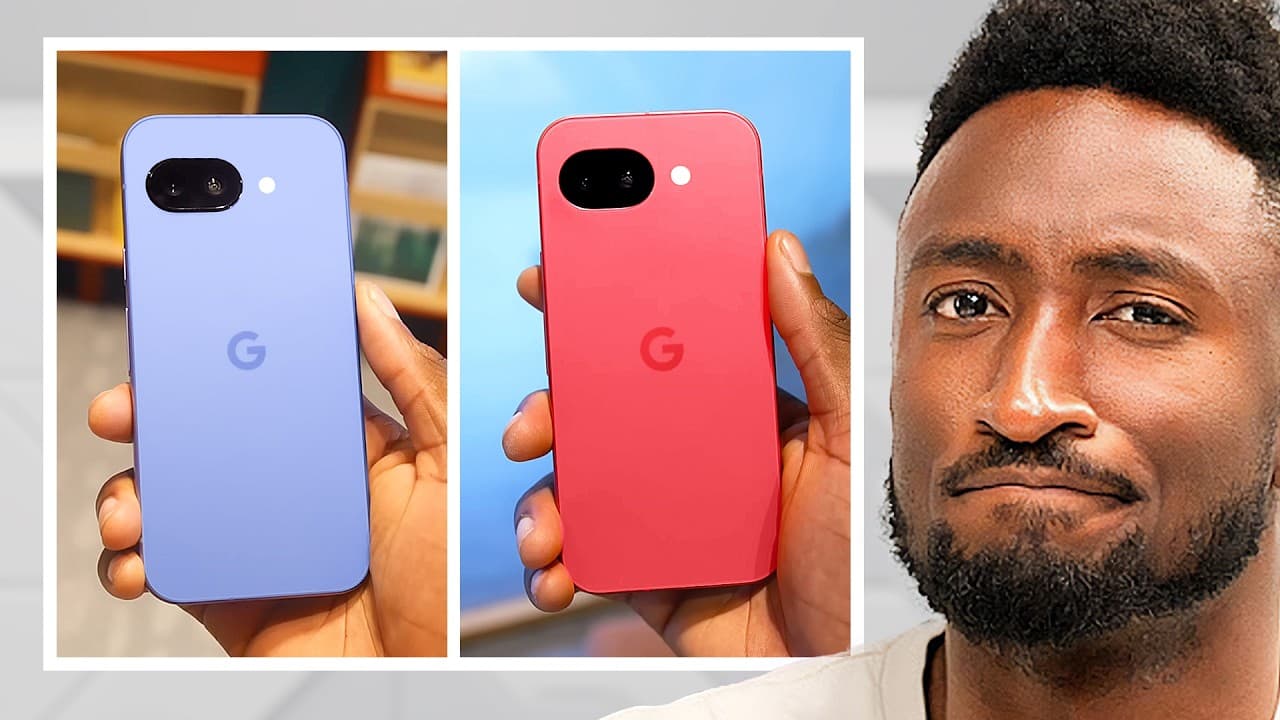
Every product launch has a moment where you realize what the company is actually telling you. For the Pixel 10a, that moment came when Marques Brownlee and his crew sat down to discuss the phone — and couldn't find enough differences to fill a review. "I have a full list here of everything that's different about the Pixel 10a versus the Pixel 9a," Brownlee said on his latest video [1]. "Ready? The camera bump — which was pretty flush before — is now actually zero flush." A pause. "Uniform bezels are slightly thinner. Wired charging goes from 23 watts to 30. And the display is 10 percent brighter." That's it. Same display size. Same resolution. Same Tensor G4 chip. Same cameras. Same 8GB of RAM. Same price. Google launched a new phone and then made reviewers discover that it wasn't one.
What the Spec Sheet Actually Says
To be precise about what did change: the camera bump is now flush to the body (from a small protrusion), the bezels are "10 percent" thinner (their words — "imperceivable" was another description from the video), peak display brightness goes from 2700 nits to 3000 nits, wired charging tops out at 30W with Google's separate 45W charger, and wireless charging improves from 7.5W to 10W [1]. That last detail is worth flagging. The 30W wired charging only applies if you buy Google's 45W USBC charger, sold separately. The briefing document Google sent reviewers was vague enough that even veteran tech journalists almost got it wrong. When your own reviewer guide creates confusion about a core spec, something has gone sideways in the product communication process. The colors are also "new" — the same four colorways with slightly more saturation and renamed. Obsidian became something else. Porcelain became Fog [1]. If you need help feeling better about keeping your 9a for another year, this is the launch that does it.