Gemma 4 Is Here: Google's Open-Source AI Runs on Your Phone — and That Changes Everything
Google DeepMind just released Gemma 4, an open-source model family that runs locally on phones, Raspberry Pis, and laptops while matching proprietary models on key benchmarks. It's the strongest argument yet that the future of AI isn't in the cloud — it's in your pocket.
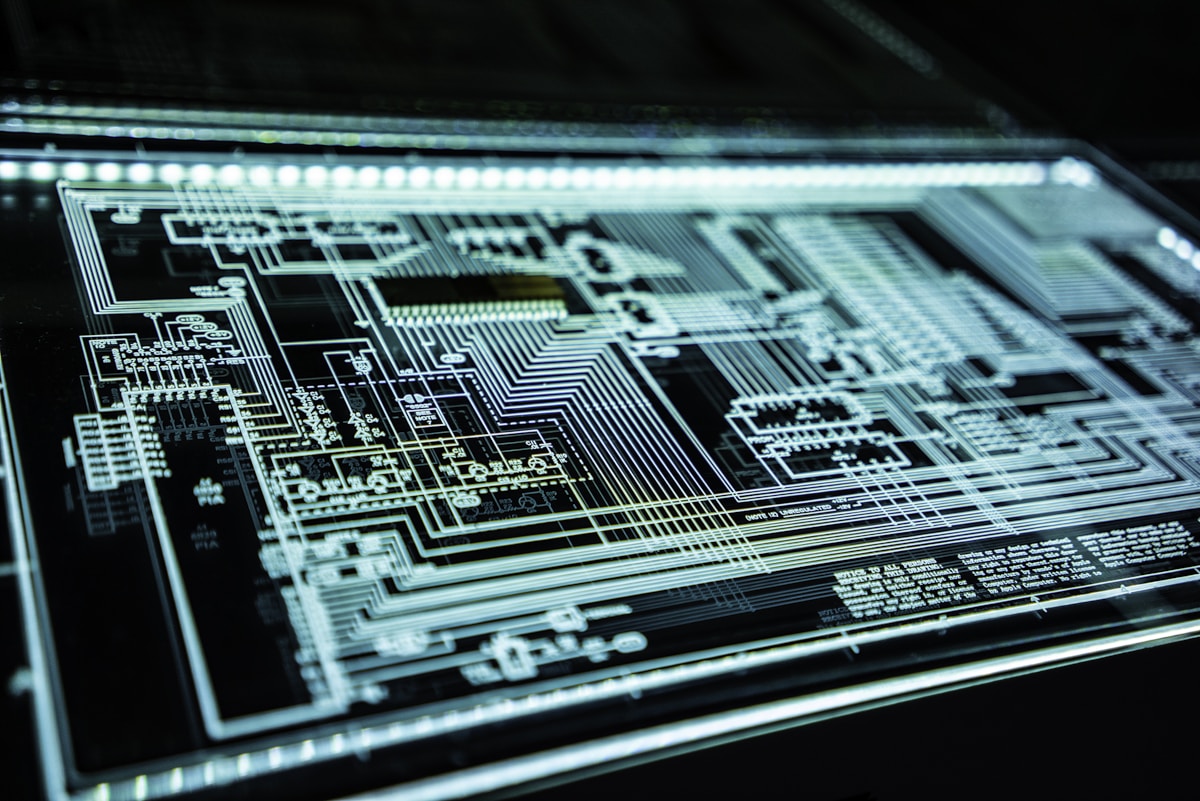
Close-up of a glowing AI processor chip with blue circuit patterns representing on-device artificial intelligence
Key Points
•Google DeepMind released Gemma 4 on April 2 under the Apache 2.0 license — four model variants from 2B to 31B parameters, with 256K context windows, multimodal inputs, and support for 140+ languages
•The 31B model scores 89.2% on AIME 2026 math benchmarks and 80% on LiveCodeBench coding problems without tool use — numbers that would have been state-of-the-art for closed models just months ago
•Unlike GPT-5 or Claude, Gemma 4 runs locally on phones, Raspberry Pis, and laptops, enabling AI agents that work offline, keep data private, and cost nothing per inference after download
•This is the clearest signal yet that open-source AI is catching proprietary models faster than anyone predicted — and the business implications for OpenAI, Anthropic, and every API-dependent startup are enormous
The Launch That Should Have Been Front-Page News
On April 2, while most of the tech press was still writing Liberation Day anniversary retrospectives, Google DeepMind quietly released what might be the most consequential AI model of 2026 [1].
Gemma 4 is a family of open-source AI models released under the Apache 2.0 license — the most permissive open-source license that exists. Anyone can download them, run them, modify them, and build commercial products with them. No API keys. No per-token charges. No terms of service that change quarterly.
The family includes four variants: a 2B-parameter model small enough for IoT devices, a 4B model for phones, a 26B model that uses a mixture-of-experts architecture for efficiency, and a 31B dense model that represents the full capability ceiling [1]. All of them support 256K token context windows, process text, images, and audio natively, and work in over 140 languages.
That spec sheet alone would be noteworthy. What makes Gemma 4 genuinely important is the benchmark performance — numbers that put it in direct competition with models costing tens of millions of dollars to access at scale.
Gemma 4's smallest model fits on a Raspberry Pi. Its largest matches proprietary competitors on math and coding benchmarks. The gap between open and closed AI just collapsed.
Let's talk about the benchmarks, because this is where the story gets interesting.
The 31B model — the largest in the Gemma 4 family — scores 89.2% on AIME 2026, a mathematics benchmark that tests genuine mathematical reasoning, not pattern matching. It hits 80% on LiveCodeBench v6, which measures performance on competitive coding problems. And it reaches 84.3% on GPQA Diamond, a scientific knowledge benchmark designed to be difficult even for domain experts [1].
For context: these are numbers that GPT-4 couldn't reliably hit when it launched. They're competitive with — and in some cases exceed — the latest results from Claude 3.5 and Gemini 2.5 on the same benchmarks. And this is an open-source model that anyone can download and run on a laptop.
The smaller models scale proportionally. The 26B mixture-of-experts variant scores 88.3% on AIME and 77.1% on LiveCodeBench while using significantly less compute per inference than the dense 31B model [1]. This matters for deployment: it means you can get 95% of the capability at roughly half the computational cost.
But the most striking number isn't any single benchmark score. It's the agentic capability metric: 86.4% on τ2-bench, a benchmark that measures an AI model's ability to use tools autonomously — planning multi-step workflows, calling APIs, navigating interfaces, and completing complex tasks without human intervention [1]. The previous Gemma 3 27B scored just 6.6% on the same benchmark.
That's not an incremental improvement. That's a generational leap in capability, and it happened in a single model release.
Why "Runs on Your Phone" Actually Matters
Every major AI company — OpenAI, Anthropic, Google's own Gemini division — makes money the same way: you send data to their servers, their servers process it, and you pay per token. It's a model that works for cloud-native applications but has three fundamental problems that no amount of optimization can fix.
First, latency. Every inference requires a round trip to a data center. For simple text generation, that's fine. For an AI agent that needs to make dozens of decisions per second — navigating an app, processing sensor data, reacting to real-time inputs — network latency becomes a hard constraint [2].
Second, privacy. When you use a cloud AI model, your data leaves your device. Every prompt, every document, every conversation passes through someone else's servers. For consumers, that's a nuisance. For enterprises handling medical records, legal documents, financial data, or government information, it's often a regulatory impossibility.
Third, cost. At scale, per-token pricing adds up fast. A company running AI-powered customer service, document processing, or content generation across millions of interactions pays millions in API fees. An open model running on local hardware costs electricity and depreciation — period.
Gemma 4 addresses all three problems simultaneously. The 2B model runs on smartphones and Raspberry Pis. The 4B model handles tablets and low-end laptops. The 26B model fits comfortably on a MacBook Pro or a gaming PC with a decent GPU. Google has already integrated the smallest variants into Android through its AICore Developer Preview, meaning any Android app can access local AI inference without sending data anywhere [2].
This isn't a theoretical capability. Google's AI Edge Gallery app, available on both iOS and Android, lets developers build and test "Agent Skills" — multi-step, autonomous workflows that run entirely on-device, powered by Gemma 4. The demo shows agents that can query knowledge bases, navigate applications, and complete tasks without any cloud connectivity [2].
The implications are enormous. An AI assistant that works on a plane. A medical diagnostic tool that processes patient data without it ever leaving the hospital network. A coding copilot that runs on a developer's laptop without sending proprietary code to a third-party server. A smart home controller that doesn't need internet to understand your voice commands.
These aren't future promises — they're capabilities that ship today, for free, under an open-source license.
The Open-Source AI Reckoning
Eighteen months ago, the conventional wisdom in Silicon Valley was clear: open-source AI would always lag closed models by 12 to 18 months. The argument was straightforward — training frontier models requires billions of dollars in compute, massive datasets, and the kind of research talent that only the best-funded labs can afford. Open-source projects, by definition, couldn't compete on those dimensions.
Gemma 4 demolishes that narrative.
The 31B model's 89.2% on AIME 2026 isn't just competitive with closed models — it's better than some of them. Its 80% on LiveCodeBench puts it in the same tier as models that cost $20 per million tokens to access. And it's available under Apache 2.0, meaning any company, researcher, or hobbyist can use it for any purpose without paying Google a cent [1].
The speed of convergence should terrify every AI company whose business model depends on model access being expensive. When Meta released LLaMA 2 in 2023, it was roughly two generations behind GPT-4. When Mistral released its models in 2024, the gap had closed to roughly one generation. Gemma 4, released in April 2026, is competitive with the current generation of proprietary models on most benchmarks.
The gap hasn't just closed. For practical purposes — the use cases that matter to most developers and enterprises — it has effectively disappeared.
This creates a pricing crisis for every AI API company. OpenAI charges $15 per million output tokens for GPT-5. Anthropic charges similar rates for Claude. If an open model delivers 90% of the capability at 0% of the per-token cost, the value proposition of paying for proprietary API access collapses for any use case that doesn't require the absolute frontier of capability.
Google's Strategic Chess Move
The obvious question: why would Google release Gemma 4 for free when it could charge for it?
The answer is the same reason Google gives away Android, Chrome, Gmail, and Google Maps: Google makes money when people use the internet. Specifically, Google makes money when people use Google's infrastructure — Google Cloud, Google's ad network, Google's ecosystem of services.
Gemma 4 is free to download, but the easiest way to deploy it at enterprise scale is through Google Cloud's Vertex AI, which offers managed endpoints, fine-tuning pipelines, and enterprise-grade reliability [3]. The model is the loss leader. The infrastructure is the business.
This is directly analogous to Microsoft's strategy with its MAI models — commoditize the model layer, win on the platform. But Google is playing a more aggressive version of the game. Microsoft launched three niche models. Google launched a full-capability general intelligence model family that competes with every major AI provider simultaneously.
There's also a competitive dimension that's easy to miss. By making Gemma 4 the default on-device model for Android, Google is building a moat around mobile AI [2]. Apple has its own on-device models through Apple Intelligence. Meta has LLaMA. But neither Apple nor Meta has the combination of model quality, device integration, and cloud infrastructure that Google now offers with Gemma 4.
For developers, the choice is increasingly clear: build on Gemma 4, deploy locally for free, and scale through Google Cloud when you need it. That's a value proposition that's very hard for pure-API companies like OpenAI and Anthropic to match.
What the Hacker News Crowd Found
Within 48 hours of launch, the developer community had already stress-tested Gemma 4 extensively. The Hacker News discussion thread captured the early findings — and revealed both the model's strengths and the messy reality of cutting-edge open-source AI [4].
The consensus: the raw model capability is genuinely impressive, but early implementations in tools like Ollama, LM Studio, and llama.cpp had bugs in tokenizer handling and quantization that made initial results unreliable. Several developers reported that tool-calling capabilities — one of Gemma 4's marquee features — didn't work correctly in some inference engines, not because the model couldn't do it, but because the software wrapping around the model wasn't ready [4].
This is a known pattern in open-source AI: every project races to support new models on launch day, shipping implementations that can produce output tokens but haven't been fully tested for correctness. The community expects a week or two of bug fixes before Gemma 4 can be fairly evaluated in third-party tools.
The practical takeaway: if you're testing Gemma 4 today through Ollama or similar tools and getting poor results, the problem is likely the implementation, not the model. Give it two weeks for the ecosystem to stabilize, then re-evaluate.
Developers are already stress-testing Gemma 4 across every major inference engine — early results suggest the model delivers on Google's benchmark claims once implementation bugs are resolved.
The Edge Computing Inflection Point
Gemma 4 isn't just a better model — it's evidence of a structural shift in where AI computation happens.
For the past three years, the AI industry has been built around a centralized architecture: train models in data centers, serve inference from data centers, charge per token. This architecture made sense when only massive data centers had enough compute to run capable models. But hardware has been catching up.
Apple's M-series chips can run 26B-parameter models at interactive speeds. Qualcomm's Snapdragon 8 Elite can handle 4B models on a phone. NVIDIA's Jetson series puts serious GPU compute into embedded devices. The hardware to run capable AI locally already exists in hundreds of millions of devices — what was missing was models designed to take advantage of it [2].
Gemma 4 fills that gap. Its architecture was designed from the ground up for efficiency — not just raw capability. The mixture-of-experts variant (26B parameters, but only 4B active per token) is specifically engineered for devices that have enough memory to store the full model but need to minimize computation per inference.
This is where Google's decision to support edge deployment natively becomes strategically brilliant. By making Gemma 4 available through Android's AICore, Google is effectively making every Android phone an AI inference device. Not through the cloud. Not through an API. Running locally, with no data leaving the device.
The companies that should be most concerned aren't OpenAI or Anthropic — they serve different markets. The companies that should worry are the thousands of AI startups that have built businesses around wrapping a proprietary API in a pretty interface. When the underlying model is free and runs locally, the API wrapper business model evaporates.
What Developers Should Actually Do
If you build products that use AI, here's the practical calculus.
For applications where data privacy matters — healthcare, legal, financial services, government — Gemma 4 should be your default starting point. A model that never sends data off-device eliminates an entire category of compliance headaches.
For cost-sensitive applications — high-volume inference, consumer products, anything with thin margins — run the numbers on local deployment versus API costs. If you're spending more than $10,000 per month on AI API calls, a local Gemma 4 deployment probably pays for itself within weeks.
For agentic applications — AI that needs to take actions, call tools, navigate interfaces — Gemma 4's 86.4% on τ2-bench makes it one of the most capable open models for autonomous workflows [1]. Test it against your current agent framework and compare.
For everything else, wait two weeks for the ecosystem to stabilize, then evaluate honestly. The benchmarks are impressive, but benchmarks aren't products. The gap between "scores well on AIME" and "reliably handles my specific use case" is always wider than you'd expect.
The Bottom Line
Google Gemma 4 isn't the flashiest AI announcement of the year. There was no keynote, no celebrity demo, no breathless marketing campaign. Just a blog post, an Apache 2.0 license, and a set of models that quietly close the gap between open-source and proprietary AI.
The 31B model matches or exceeds proprietary competitors on math, coding, and scientific benchmarks. The smaller models run on phones, Raspberry Pis, and laptops. The agentic capabilities represent a 13x improvement over the previous generation. And all of it is free.
For developers, this is the strongest argument yet for building on open models. For enterprises, it's a new option for private, cost-effective AI deployment. For the AI industry as a whole, it's confirmation that the value in AI is migrating from models to platforms — and the companies that only sell model access are running out of runway.
The future of AI isn't in the cloud. It's on your device, running a model you downloaded for free, processing your data without sending it anywhere. Gemma 4 just made that future real.