
Apple Didn't Hold an Event. The M5 MacBook Pro Didn't Need One.
Apple's product launch strategy used to be one of the most reliable spectacles in tech. Packed auditoriums, "one more thing" moments, Tim Cook standing in front of impossibly large slides. In 2026, Apple launched the MacBook Pro M5 with a press release. No event. No stage. No keynote. And honestly? It didn't matter. YouTube reviewers picked up the slack within days of units shipping, and what they've found is worth understanding — because the M5 Pro is a meaningful upgrade even if it doesn't look like one from the outside.
The Same Shell, a Different Engine
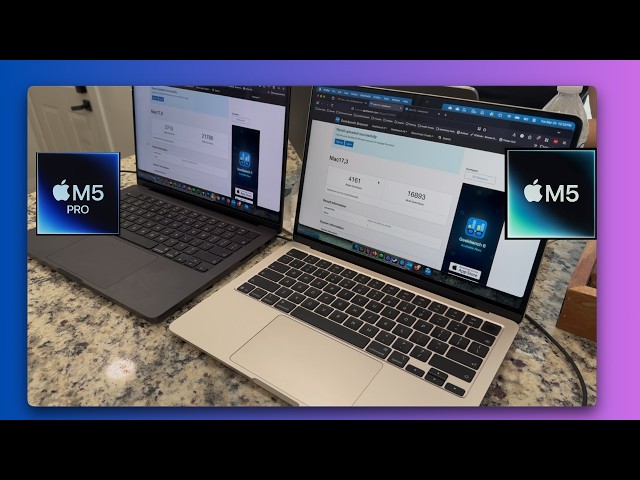
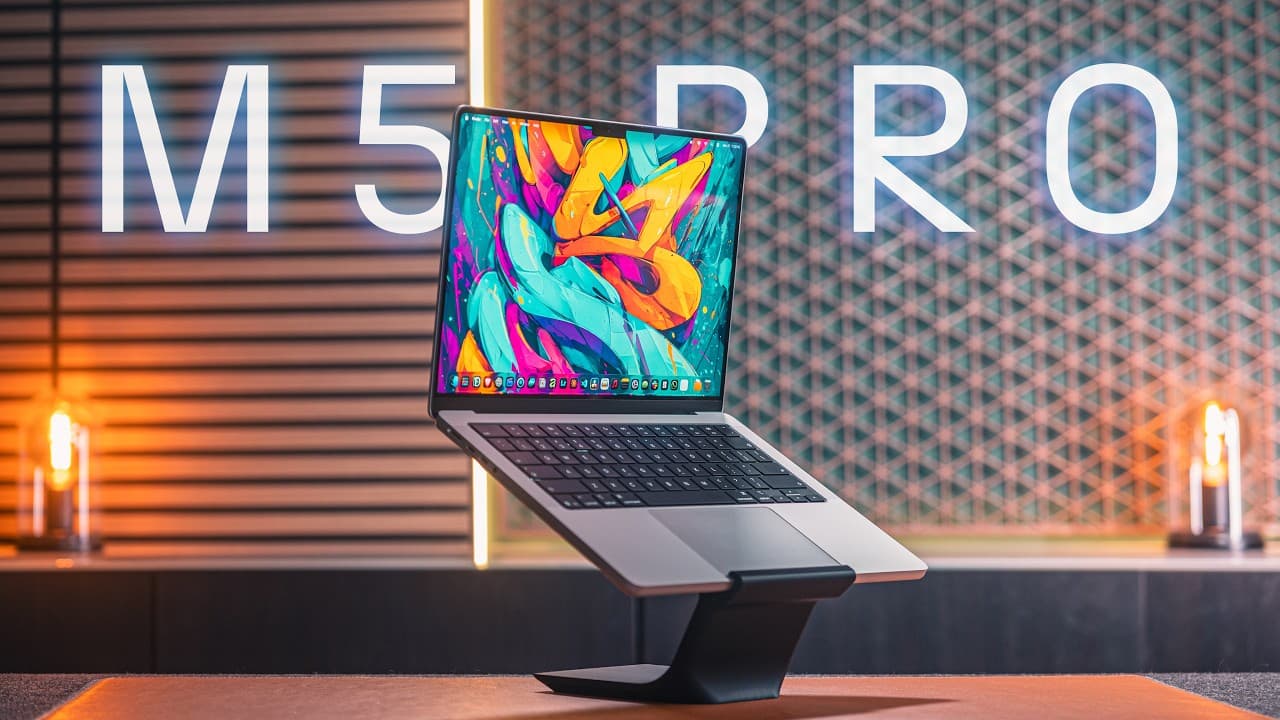
Apple hasn't changed the MacBook Pro design since 2021. Same dimensions, same weight, same port layout on the 14-inch model. One small change: Apple swapped written key legends on the keyboard for icons. You probably won't notice it. The XDR mini-LED display is still exceptional — deep blacks competitive with OLED, outstanding color accuracy, 1,600 nits peak HDR, 1,000 nits SDR outdoors. What changed is what's running underneath. The M5 Pro introduces what Apple calls "fusion architecture" — essentially two smaller chips fused together instead of one large die. The result: memory bandwidth jumps to 307 GB/s, up from 273 GB/s on the M4 Pro. The base M5 Pro packs a 15-core CPU with five "super cores" (fast single-threaded) and 10 "performance cores" (multi-threaded, more efficient). No efficiency cores at all — a configuration shift from previous generations [1]. In benchmarks, this translates to roughly 10% single-core improvement and about 25% multi-core improvement over the M4 Pro. The GPU gains are even bigger: 30–50% better in graphics benchmarks despite keeping the same 16-core GPU count as the M4 Pro. If you're doing GPU-heavy creative work — 3D rendering, motion graphics, complex game frame rates — those numbers are real [1].