
Apple Walked Into the Chromebook Fight
For years, Apple's cheapest Mac was a MacBook Air that started at $999. If you wanted something cheaper, you bought a Windows laptop, a Chromebook, or you waited for a refurb. Apple wasn't competing in the budget tier — and it wasn't trying to. That changed this week. Apple announced the MacBook Neo at $599 ($499 for students), and it's not a stripped-down Mac — it's an entirely different kind of machine. The Neo is the first Mac ever powered by an iPhone chip. Not an M-series processor. The A18 Pro, the same chip that shipped inside the iPhone 16 Pro in 2024 [1]. That's the move. That's what makes this interesting and, depending on your perspective, either brilliant or unsettling for the Mac lineup as a whole.
What $599 Actually Gets You
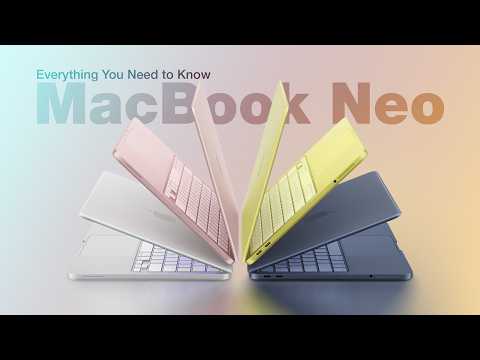
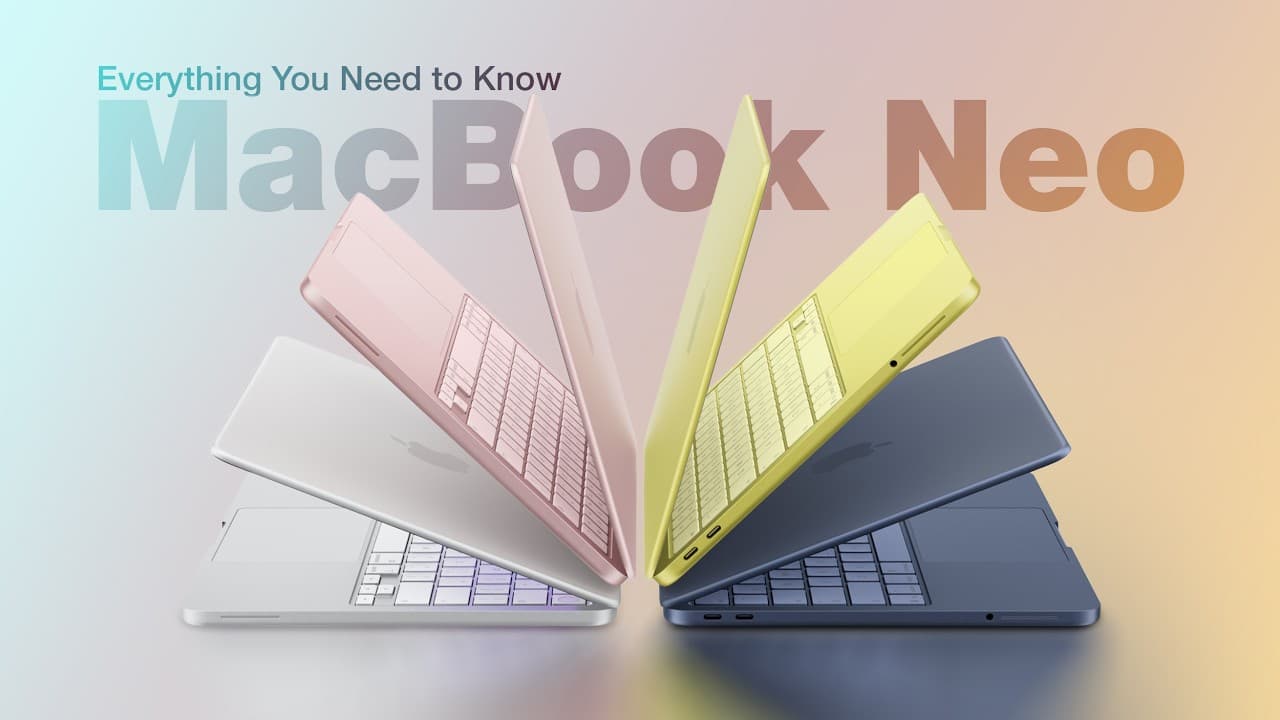
Dan from Mac Rumors went hands-on with the MacBook Neo at Apple's New York experience event, and his first impression tracks with what the specs suggest: this is a competent machine that makes deliberate trade-offs to hit a price [1]. Start with the good. Apple claims the A18 Pro delivers up to 50% faster everyday performance than the best-selling PC with an Intel Core Ultra 5 chip. For on-device AI workloads, it's supposedly 3x faster. Battery life is rated at 16 hours. The 13-inch Liquid Retina display has 500 nits of brightness and an anti-reflective coating. You get Bluetooth 6, two USB-C ports, a 3.5mm headphone jack, and a color-matched keyboard in silver, blush, citrus, or indigo [1]. The colors are more vivid in person than in photos, according to Dan — "a lot more colorful in real life." The chassis is aluminum, not plastic, even at $599. Apple Intelligence is supported, using the same on-device AI stack that runs on modern iPhones. The thing is light — roughly the same weight as a MacBook Air — and it looks and feels like a Mac [1]. Now the trade-offs. The base model ($599) ships without a backlit keyboard. You need to pay $100 more to get 512GB storage AND Touch ID — the base model has a regular lock button, not the fingerprint reader most Mac users take for granted. The trackpad is physically clicking rather than the Force Touch haptic mechanism Apple uses everywhere else — a cost-saving measure that, according to Dan, "kind of just feels the same" in practice [1]. The port situation is where things get interesting for anyone who cares about I/O. Both ports are USB-C but only one supports USB 3 speeds. The other is USB 2.0 — which, in 2026, on a Mac, is worth noting. The MacBook Air M5 that starts at $1,099 has Thunderbolt 4. The Neo has nothing close to that [1]. Wi-Fi is 6, not 7. RAM is 8GB and, like all Apple Silicon Macs, it can't be upgraded after purchase. The display bezels are thick by modern standards — iPad-style borders instead of the slim bezels on the MacBook Air. None of this is accidental. Every one of these cuts is a line item Apple removed to hit $599.