
The Hype Is Loud. But So Are the Benchmarks.
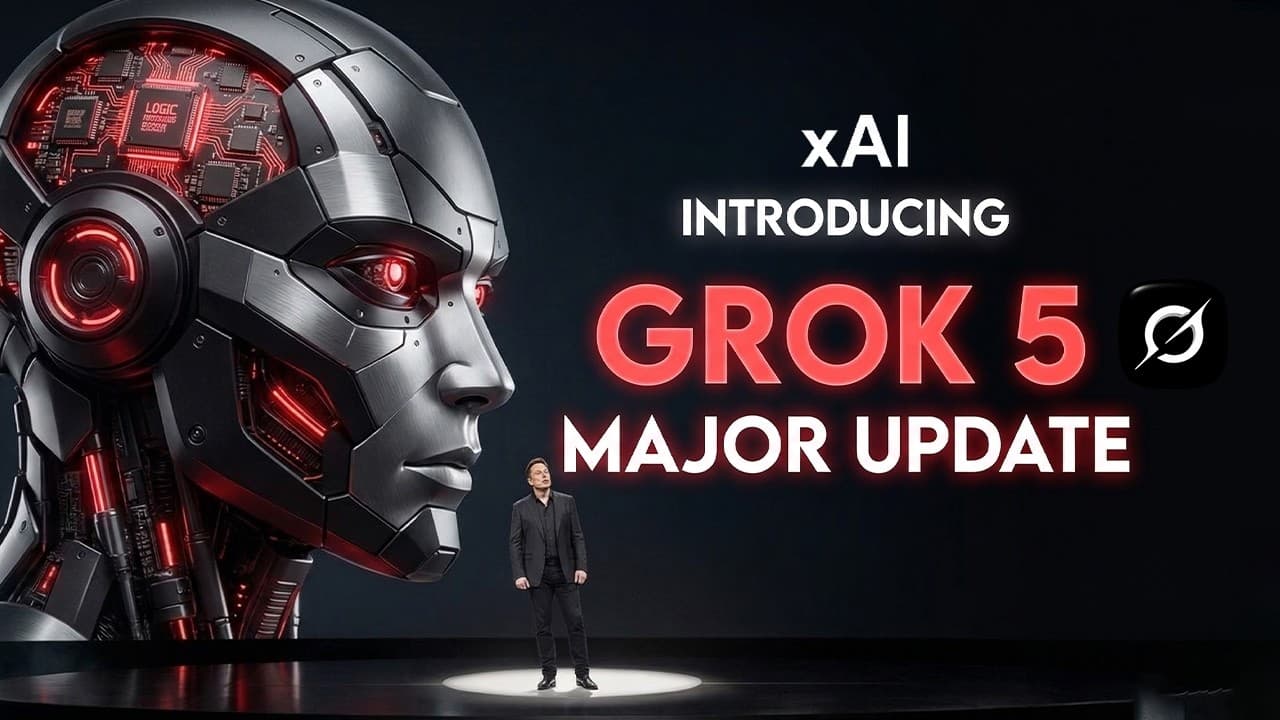
Everyone is talking about Grok 5. Elon Musk says it has a 10% chance of being AGI, 6 trillion parameters, and half a million GPUs behind it. And your first instinct is probably right: that sounds like a Musk hype cycle. But here's the thing — before you dismiss it, you need to look at what Grok 4 actually did. Because that model was not a hype story. It was a benchmark story. Grok 4 scored 50.7% on Humanity's Last Exam — a test specifically designed so no AI could pass it. Before Grok 4, no closed model had cracked 50%. It hit 15.9% on ARC AGI v2, nearly double what Claude Opus 4 managed. On the US Math Olympiad: 61.9%, while GPT-4 sat at around 37%. Those aren't cherry-picked numbers. That's the model actually doing something new [1]. So when xAI says Grok 5 will be bigger, trained on more compute, and push these capabilities further — it's worth taking seriously. Not because Musk says so. Because the trajectory says so.
What We Know (and What's Still Rumor)
Let's be clear about one thing: Grok 5 has not been officially announced. There's no model card, no blog post, no benchmarks from xAI. Everything in circulation comes from Musk's public statements, analyst reports, and the leaked architecture details from people close to the project. That said, the picture that's emerging is specific enough to be interesting. According to analyst reports cited by the video breakdown from bitbiased.ai [1], Grok 5 is being trained on a parameter count somewhere between 1.7 trillion and 6 trillion. To put that in perspective: GPT-4 is roughly 175 billion dense parameters. Even the most aggressive GPT-5 estimates top out around 1–2 trillion. If the 6 trillion figure is accurate, Grok 5 would be the largest mixture-of-experts model ever built — by a significant margin. On the infrastructure side, xAI is building or has built Colossus 2 — a next-gen supercluster rumored to house over 550,000 GPUs. The original Colossus that trained Grok 4 ran on 200,000 H100s. Three times the compute firepower. For context, those GPUs run about $25,000 each. Before you factor in power, cooling, and operational costs, you're looking at hardware spend that rivals the GDP of a small nation. Musk's release timeline for Q1 2026 has slipped, but prediction markets and industry reporting still put the window as realistic [2]. Training continues on Colossus at scale.