Samsung's Galaxy S26 Has a 'Privacy Display' That Goes Dark When Someone Looks Over Your Shoulder
Samsung's Galaxy S26, launching at Unpacked on February 25, introduces a hardware-level privacy display that restricts viewing angles so the screen appears dark to anyone not directly in front of it. Plus deep Perplexity AI integration with a Hey Plex hotword.
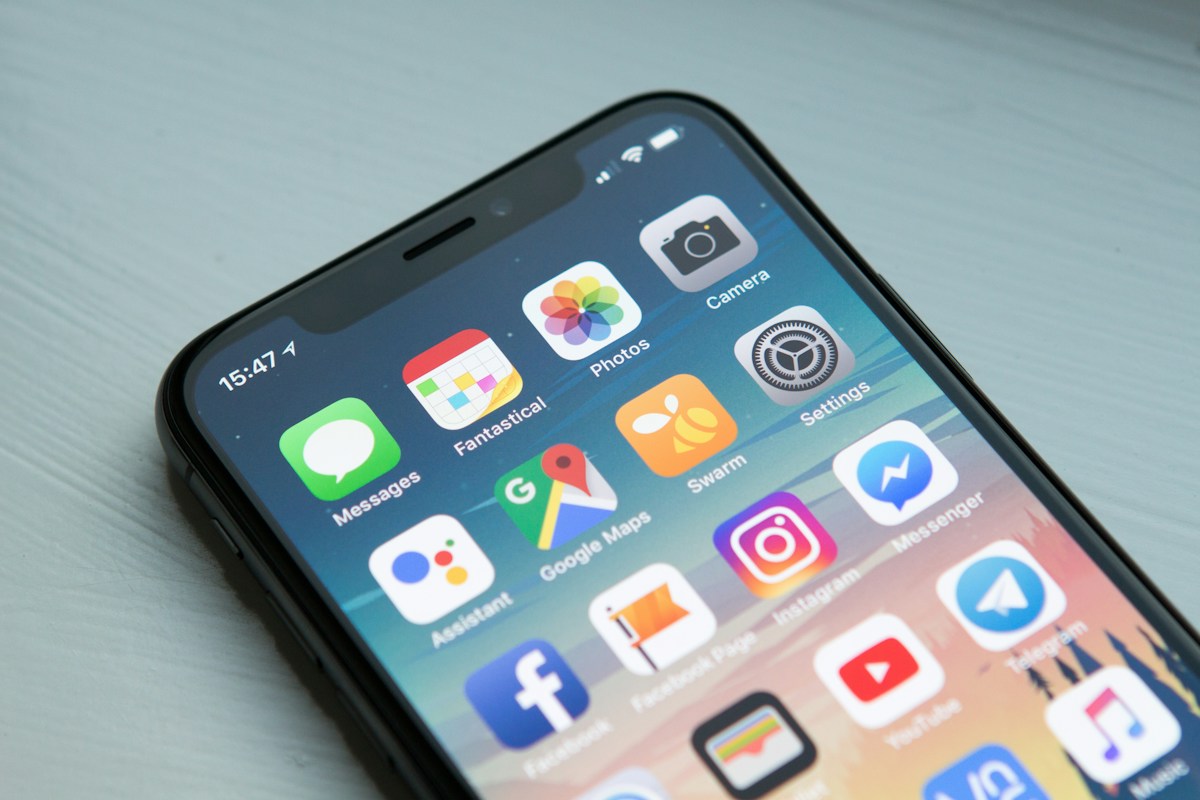
A person holding a Samsung smartphone, representing the Galaxy S26's new privacy-focused hardware features launching at Unpacked on February 25.
Key Points
•Samsung's Galaxy S26, launching at Unpacked on February 25, introduces a hardware-level "privacy display" that restricts viewing angles so the screen appears dark to anyone not directly in front of it. This is not a software filter — it requires new display hardware and cannot be retrofitted. [1][4]
•The more strategically significant move is deep Perplexity AI integration with a "Hey Plex" hotword, positioning Perplexity as a first-class alternative to Google and Bixby on Samsung devices. Samsung is hedging its AI assistant strategy across three partners instead of picking one. [2]
•The privacy display targets enterprise and government buyers who currently use physical screen protectors or avoid using phones in public for sensitive work. If Samsung can market this as a security feature rather than a consumer gimmick, it opens a new procurement argument. [1][4]
A screen that knows who is looking
Galaxy Unpacked is two days away, and for once the most interesting Samsung announcement is not about cameras, chipsets, or foldables. It is about a display feature that sounds simple and is genuinely hard to build: a screen that restricts its own viewing angle on demand. [1]
Samsung is calling it a "privacy display." The concept is straightforward — activate it, and the screen content becomes visible only to someone looking at the phone head-on. Anyone glancing from the side sees a darkened screen. It works across all three S26 models (S26, S26+, S26 Ultra) and it is a hardware feature, not a software trick. [4]
This matters because screen privacy has been a real, unsolved problem in mobile devices. Physical privacy screen protectors exist — those plastic films that narrow viewing angles — but they degrade image quality permanently, reduce brightness, and look terrible. Software-based solutions that dim screen edges are trivially bypassed by shifting your viewing angle slightly. Samsung's approach embeds the capability into the display panel itself, allowing users to toggle between normal and private viewing modes without any physical accessory. [1]
•For the broader industry, Samsung's willingness to fragment its own AI assistant layer — Bixby, Google, and now Perplexity — signals that the "default assistant" war is far from settled, and OEMs may increasingly treat AI search as a marketplace rather than a monopoly. [2][3]
The Sakitech review breakdown puts it plainly: "This privacy display is an exclusive S26 feature. Basically, it's going to restrict the viewing angle of the screen, making the content visible only to the person directly in front of the display. To anyone looking from the side, the screen is going to appear dark." [4]
If the execution matches the description, this is a genuine hardware innovation rather than a spec-sheet line item.
Why this matters more for enterprise than consumers
The consumer pitch is obvious: nobody likes the person on the subway reading your texts. But the bigger market opportunity is enterprise and government.
Financial advisors reviewing client portfolios in coffee shops. Healthcare workers accessing patient records on the go. Government employees handling classified-adjacent information on personal devices. Legal professionals reading privileged documents during commutes. All of these use cases currently involve either physical screen protectors, awkward body-shielding, or simply not using the phone for sensitive tasks in public.
A hardware-level privacy mode that can be toggled on and off changes the procurement conversation. IT security teams evaluating mobile devices for regulated industries could view the S26's privacy display as a compliance-enabling feature — something that justifies Samsung over competitors on security grounds rather than just specs or price. [1]
Samsung has been quietly building its enterprise credibility through Knox, its security platform. The privacy display adds a hardware dimension to that story. Whether Samsung markets it effectively to enterprise buyers or buries it in consumer feature lists will determine whether this becomes a competitive differentiator or a footnote.
The privacy display's real market may be enterprise and government buyers who need visual data protection in public environments.
"Hey Plex" — Samsung's quiet bet against Google
The privacy display will get the headlines, but the more strategically revealing announcement is what Samsung is doing with AI assistants. The Galaxy S26 will ship with deep Perplexity AI integration, including a dedicated "Hey Plex" hotword that lets users invoke Perplexity as a primary assistant — alongside Google Assistant and Bixby. [2]
This is not a minor partnership. A hotword means system-level integration: always-listening capability, lock-screen access, and the kind of privileged OS hooks that previously only Google and Samsung's own Bixby enjoyed. Samsung is giving Perplexity the same tier of access as Google on its flagship device. [2]
The strategic implications are significant. Samsung has historically been dependent on Google for Android and for the default search/assistant revenue that comes with it. Google pays billions annually to be the default search engine on Samsung devices. By elevating Perplexity to co-equal status, Samsung is doing two things simultaneously: creating leverage in its Google negotiations and signaling to the market that AI search is becoming a multi-player game. [2][3]
For Perplexity, this is a distribution breakthrough. The company has been growing rapidly as an AI-native search engine, but distribution remains the fundamental challenge for any Google competitor. Being pre-installed with hotword access on the world's best-selling Android phone line is the kind of distribution deal that changes company trajectories.
Three assistants, one phone: strategy or confusion?
Here is where skepticism is warranted. After February 25, a Galaxy S26 owner will have access to three different AI assistants: Bixby (Samsung's own), Google Assistant/Gemini (deeply integrated into Android), and Perplexity (via "Hey Plex"). That is a lot of assistants. The bull case is that Samsung is offering users choice. The bear case is that three overlapping assistants create a confusing user experience where nobody — including Samsung — knows which one to use when. [2]
Apple's approach is the opposite: one assistant (Siri, now with Apple Intelligence), deeply integrated, no alternatives at the system level. Google's Pixel phones push Gemini as the single assistant. Samsung is betting that fragmentation is a feature, not a bug.
The resolution will come from user behavior. If S26 owners gravitate toward one assistant and ignore the others, Samsung will eventually consolidate. If different users genuinely prefer different assistants for different tasks, the multi-assistant model could become the Android standard. Either way, Samsung is running the experiment at scale. [2][3]
The camera and chip story (briefly)
No Samsung flagship launch is complete without camera and processor upgrades, and the S26 delivers the expected improvements. GSMArena's coverage highlights significant low-light camera performance gains, demonstrated through Samsung's own AI-enhanced video samples. [3] The S26 Ultra reportedly features an improved 200MP main sensor with better computational photography — though evaluating camera claims from manufacturer samples is always unreliable.
The chip situation is more complex. Samsung is expected to use Qualcomm's Snapdragon 8 Elite across all S26 models in most markets, with its own Exynos processor potentially appearing in select regions. The honest assessment: if you own an S25, the chip and camera improvements alone do not justify upgrading. The privacy display and Perplexity integration are the only features that offer genuinely new capabilities rather than incremental improvements. [1][3]
What to watch at Unpacked on February 25
Beyond the S26 lineup, Samsung is expected to announce updates to its Galaxy Ring, potential new Galaxy Book laptops, and possibly a preview of its XR headset plans. The questions that matter: Privacy display real-world performance — does it actually work in varied lighting? Perplexity integration depth — is Hey Plex genuinely always-listening? Pricing — any increase narrows the gap to Apple's iPhone. And enterprise marketing — does Samsung position the privacy display as a consumer feature or invest in enterprise-specific Knox integration? [1]
Bottom line
The Galaxy S26 is an interesting inflection point for Samsung. The privacy display is a genuine hardware innovation that solves a real problem — and could open enterprise markets that spec bumps alone never will. The Perplexity integration signals a willingness to challenge Google's assistant dominance on Samsung's own devices, even at the risk of user confusion. [1][2][3][4]
For Prince readers, Unpacked on February 25 is worth watching not for the usual camera samples and benchmark slides, but for two strategic signals: whether Samsung is serious about privacy as a hardware differentiator, and whether the AI assistant market is about to get a lot more competitive.