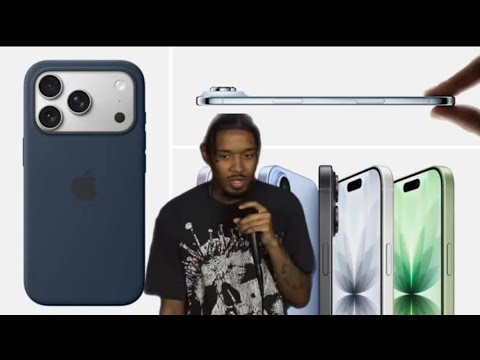

Apple Went All-In on Thin
Marques Brownlee has been reviewing phones for more than a decade. He's held every major iPhone launch, every Galaxy flagship, every foldable that's hit the market. So when MKBHD picks up the iPhone Air for the first time on camera and his first reaction is "so sick" followed immediately by a list of red flags, you pay attention [1]. The iPhone Air is Apple's most audacious hardware bet in years. At 5.6 millimeters at its thinnest point, it is — by a significant margin — the thinnest iPhone Apple has ever made. The frame is grade 5 spacecraft titanium. The front and back are enclosed in ceramic shield glass that Apple claims is three times more scratch-resistant than the previous generation. It has the A19 Pro chip, a 48MP Fusion camera, and a new center-stage selfie system that shoots both portrait and landscape without rotating the phone. It starts at $999. On paper, that sounds like a Pro phone in a thinner body. In practice, MKBHD says, it's more complicated than that.
Three Red Flags, One by One
The first red flag is heat. Apple made a specific point during the iPhone 17 Pro announcement to explain why they switched the Pro back to aluminum after going titanium for the 15 and 16 generations: aluminum is better thermally. They also added a vapor chamber inside the 17 Pro — the first ever on an iPhone — specifically to keep sustained performance from throttling during long gaming sessions, video renders, or heavy compute workloads. Apple says this results in 40% better sustained performance [1]. The iPhone Air has none of that. It still uses titanium, which runs hotter under load. There is no vapor chamber. There is not even room for one at 5.6mm. MKBHD called this out directly: under sustained loads, the Air is likely to throttle significantly faster than the Pro. For everyday use — texts, browsing, social media — this probably doesn't matter. For anyone who wants to do anything compute-intensive on the phone, this is a genuine limitation [1].